
Colored gemstone jewelry is on a massive rise in 2026, and we couldn’t be happier about it!
There are several keys to building a colored gemstone jewelry collection that you are absolutely in love with.
Whether you’re building a fine jewelry collection for the first time or simply want to acquire more colored gemstone pieces, the first piece of advice we’d give is to find one ring, pair of earrings, and one necklace that you could wear day in, day out. Three staples that are versatile, comfortable, and look cute with everything so you can throw them on all the time without thinking about it.
Pieces We’d Recommend:
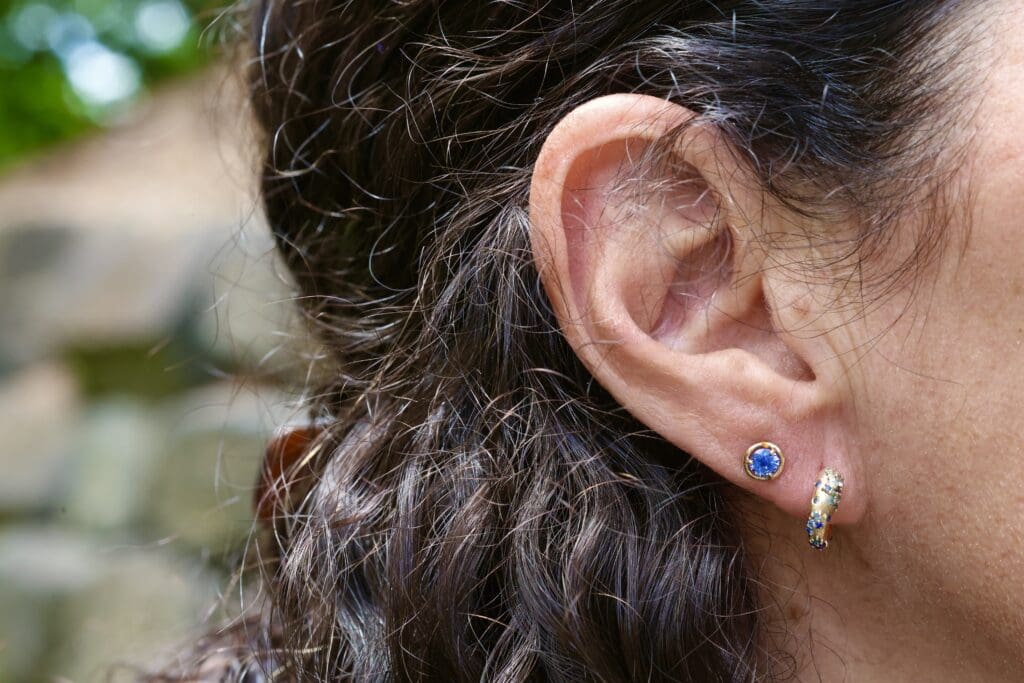
Our Wave Studs in Blue Sapphire by Dylann Wolfe. Photo by Chloe Beaumont.
These wave studs are a new design by designer Morgan Burger of Dylann Wolfe Jewelry. The second we saw them in person, we knew these would look amazing as second hole studs or by themselves–and boy were we right!
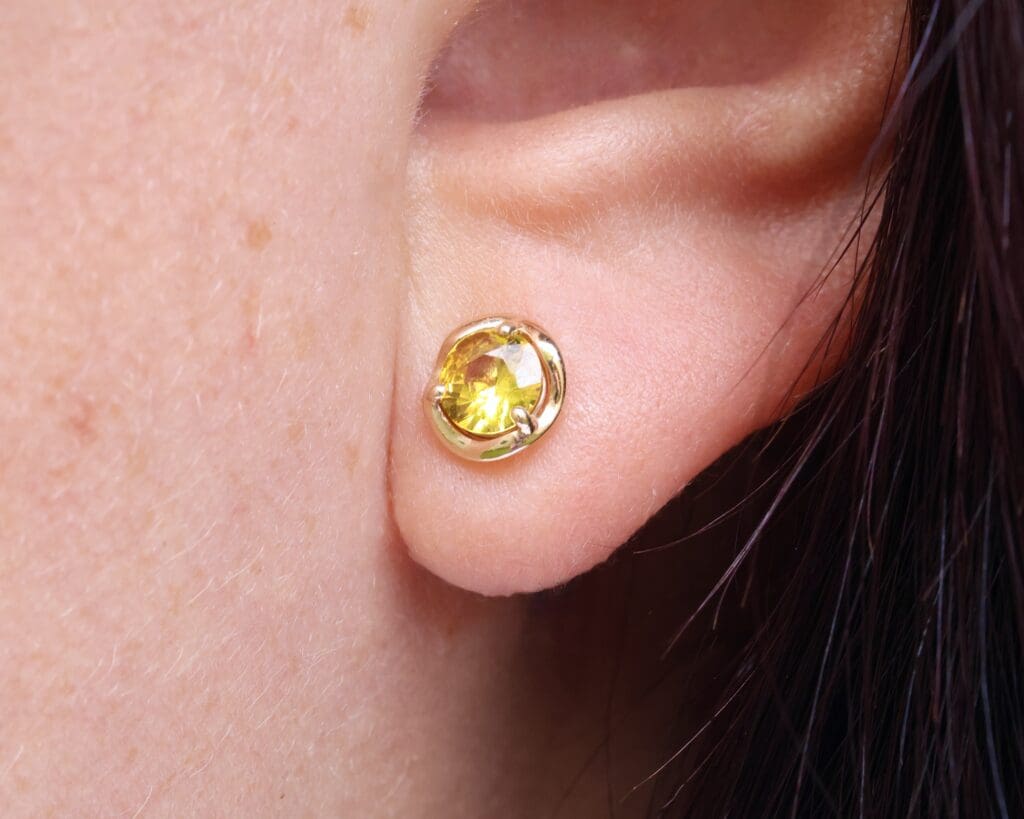
Our Wave Studs with 5mm yellow sapphires by Dylann Wolfe. Photo by Laura Beaumont.
These vibrant studs are the perfect pair of earrings for when you’re craving color but still want a more minimalist design.
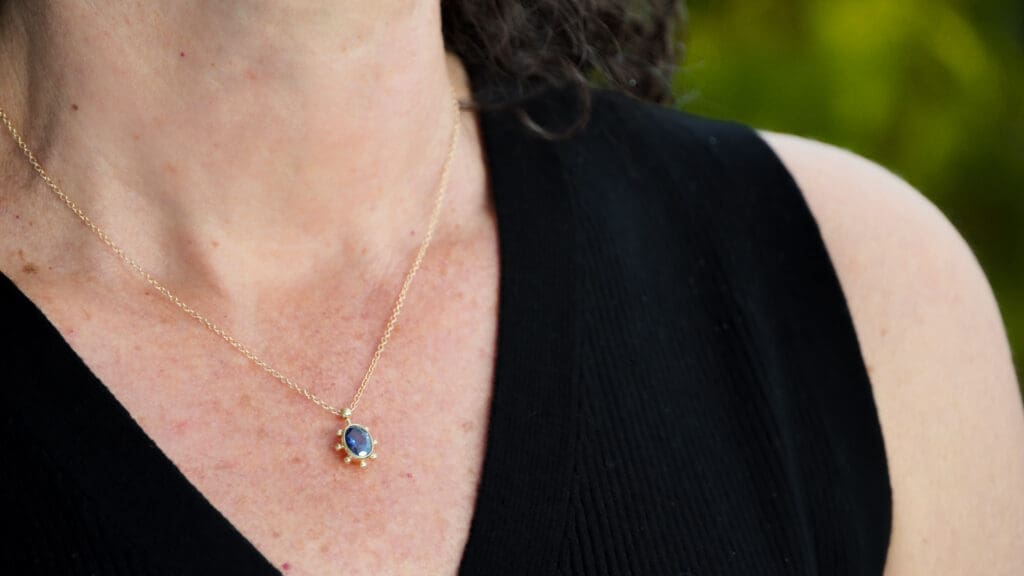
Our Elysia Necklace by M.Hisae in recycled 14kt yellow gold. Photo by Morgan Burger.
As for a necklace that you could wear everyday, we think our Elysia Necklace by M. Hisae is a great pick! Iolite is one of those gems whose violet hue seems to just fit right in with any other color palette. It’s deep, alluring, mysterious, and much more affordable than a sapphire would be in the same hue. This piece comes on a dainty 16 inch 14kt yellow gold cable chain that you’ll barely feel when wearing it.
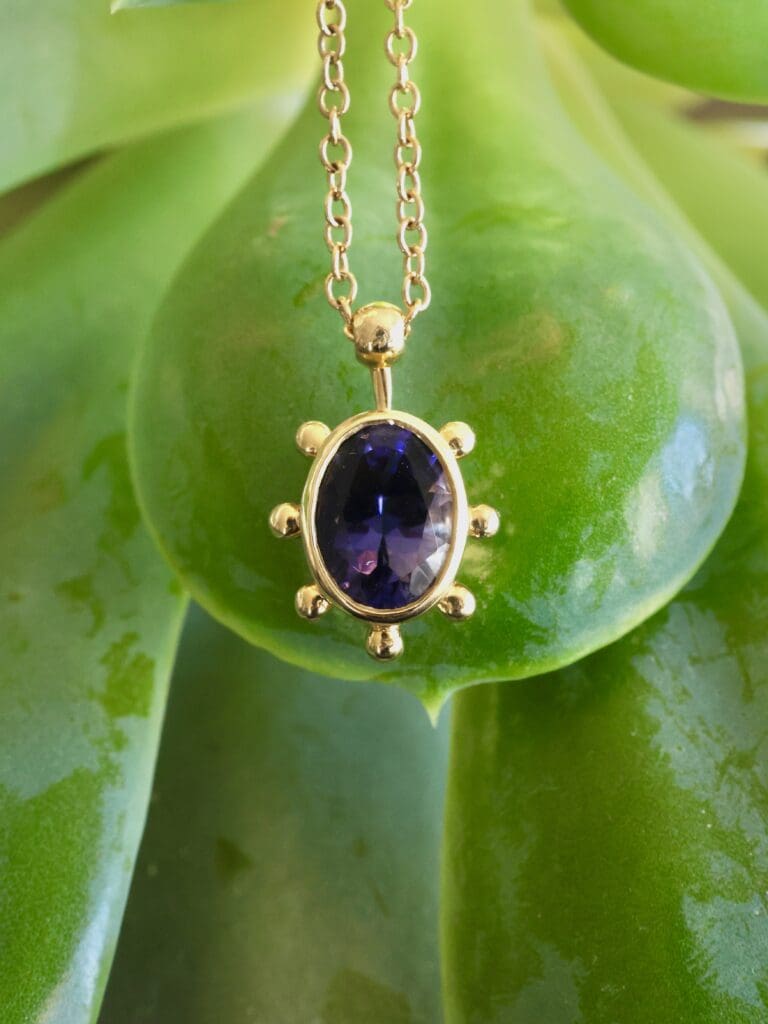
Our Elysia Necklace by M.Hisae. Photo by Chloe Beaumont.
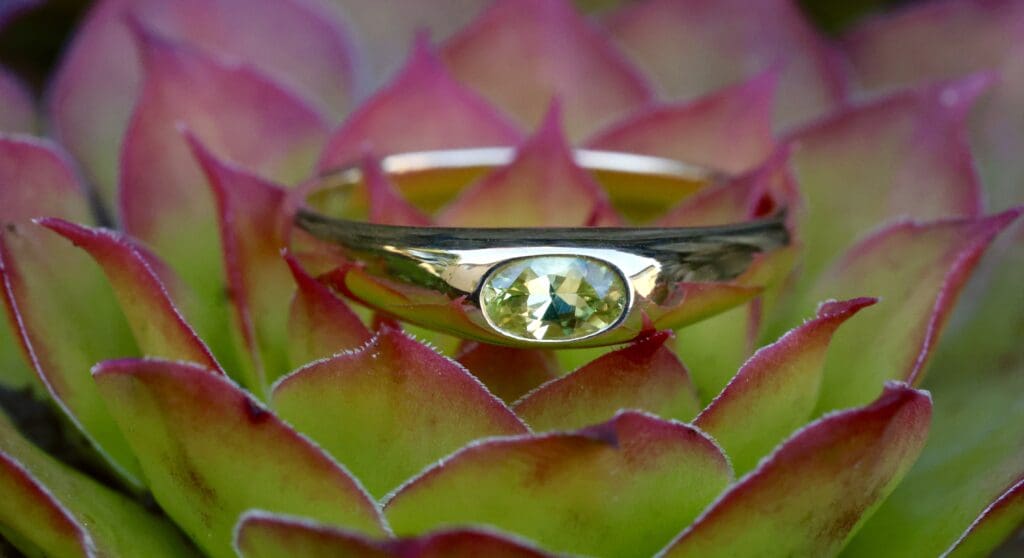
Our Petite Risa Ring in Yellow Sapphire by M. Hisae. Photo by Chloe Beaumont.
For our everyday ring pick, we’re going with another one of Michelle’s pieces: the Petite Risa ring. We love the version that features a gorgeous Australian yellow sapphire. It works to create an almost monotone (but never boring) vibe set in SCS-certified recycled 14kt yellow gold.
Plus, the sleek contour and comfort fit of this design makes the ring oh-so-comfortable when worn. It’s the dainty little pop of color your collection needs and be styled with just about anything.
Okay, so you have some staple pieces. Time to find a piece that really brings the “wow factor” and that will be a conversation starter no matter what room you walk into!
Chloe selected three pieces that we feel embody this exact vibe…
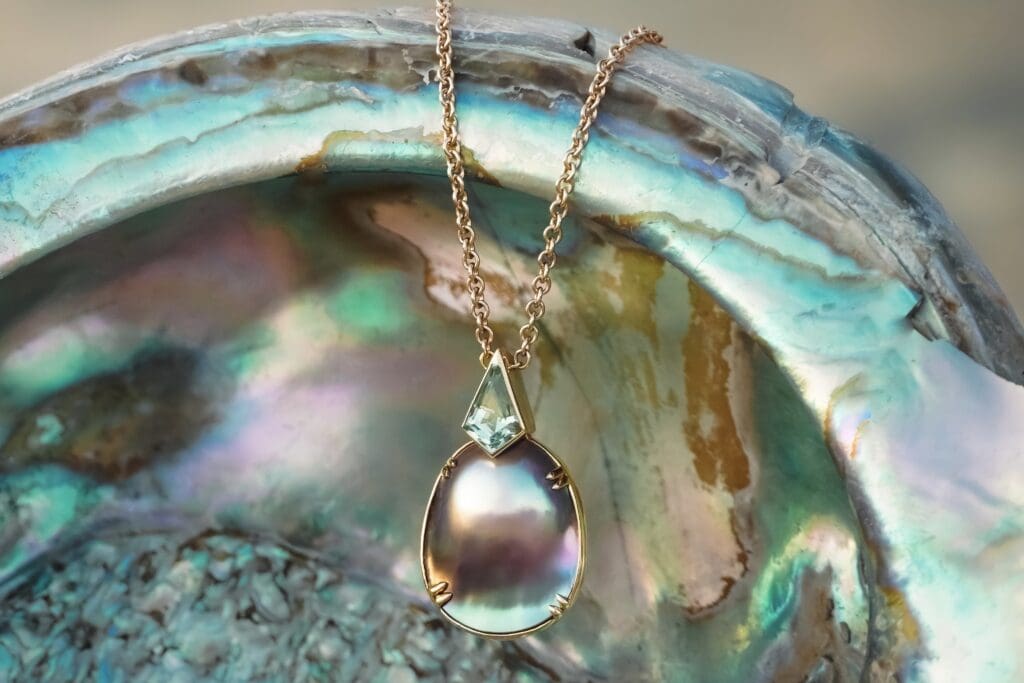
Our Sea of Cortez and Tourmaline Necklace by Dylann Wolfe. Photo by Morgan Burger.
The Sea of Cortez and Tourmaline Necklace by Dylann Wolfe is a little bit of a viral sensation. It’s gotten a LOT of love, but no one has claimed this one of a kind beauty (yet!)
The minty green tourmaline kite perched at the top doubles as the bail that the yellow gold chain slides through. The gorgeous luster of the pearl, flat + smooth gold setting on the back, and size of this piece all add up to visual impact that stops people in their tracks.
This statement piece needs no company, but if you wanted to pair it with something, we’d suggest a stack of Dylann Wolfe Long Lull eternity rings in seafoam green sapphire, blue sapphire, and lavender sapphire. For earrings, pair it with our Dylann Wolfe Wave Huggies in the Dawn Patrol colorway.
Another piece that we think is a great conversation starter is our Cortez Pearl and Diamond Swirl ring by Kathe Mai. (Can you tell we are obsessed with lavender pearls around here?!)
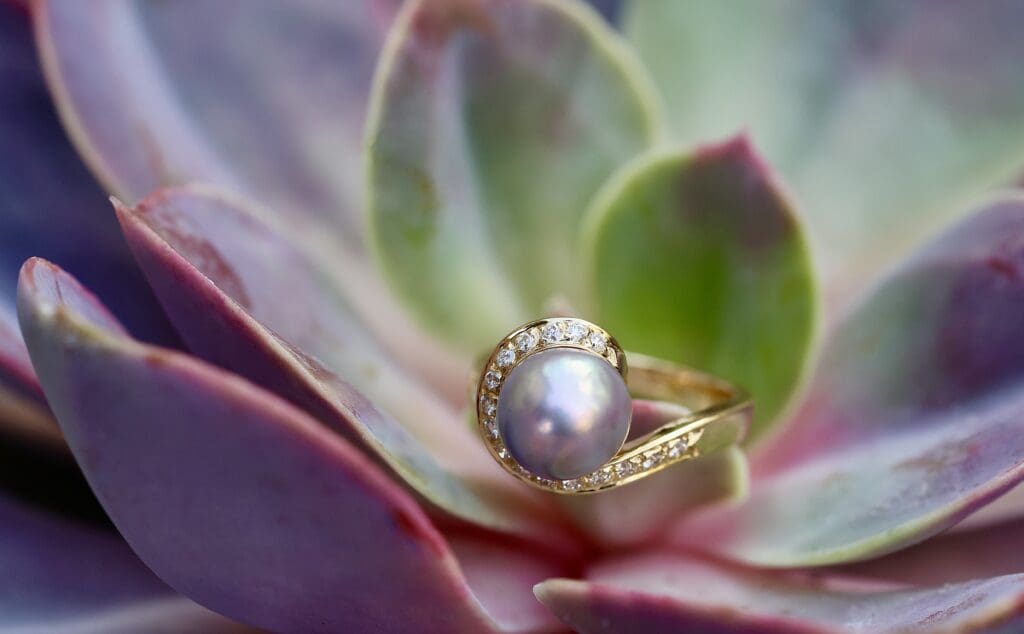
Our Cortez Pearl and Diamond Swirl ring by Kathe Mai. Photo by Chloe Beaumont.
This 18kt yellow gold stunner is magically captivating and has a higher finger profile to really stand out and catch your attention.
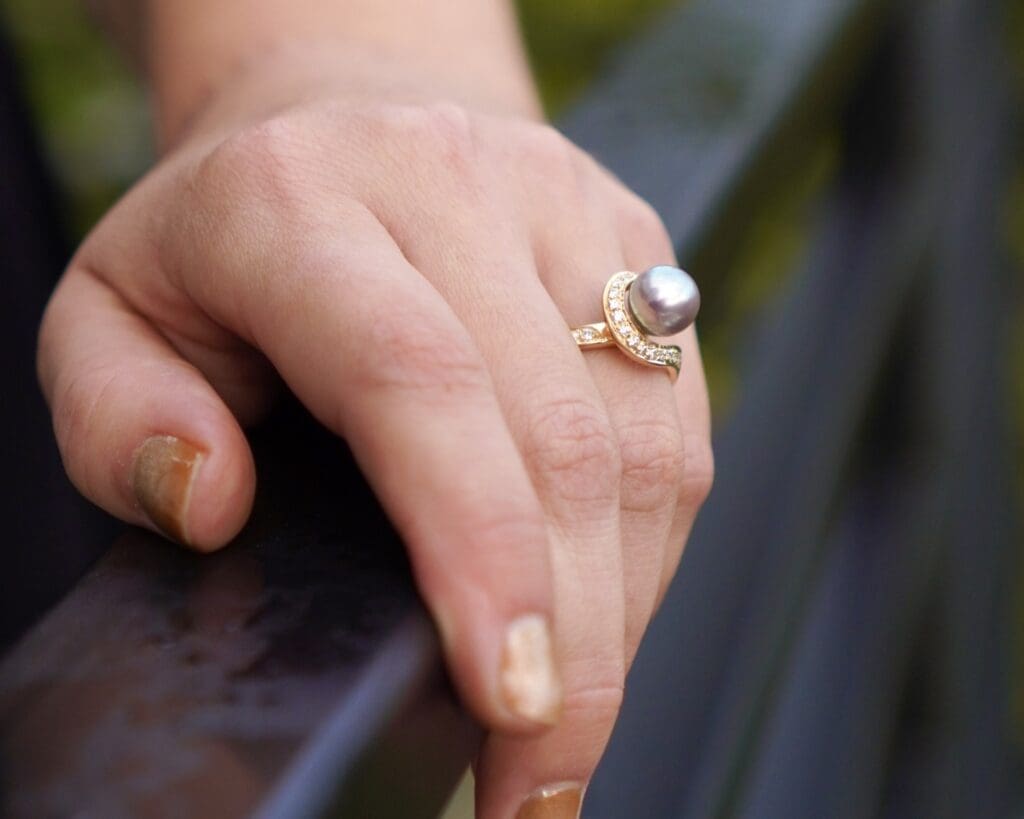
The Our Cortez Pearl and Diamond Swirl ring by Kathe Mai on model. Photo by Morgan Burger.
The way the diamonds swirl around the Cortez pearl is unique and whimsical, and helps to add to the organic nature of the piece.
Did you know that Cortez pearls are the rarest of cultured pearls? Only 4,000 are cultivated per year, maximum. Another great point to bring up when people compliment you on your Cortez pearl piece!
Finally, our third “conversation starter” pick is our Dumortierite and Tanzanite Cauldron Pendant by Mercurius Jewelry.
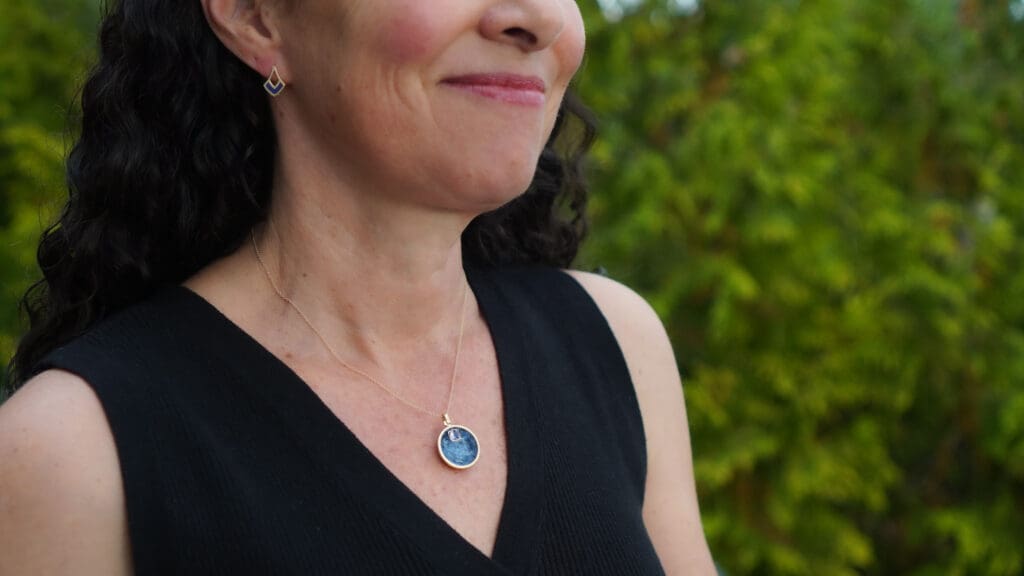
Our Dumortierite and Tanzanite Cauldron Pendant by Mercurius Jewelry. Shown here on our 18 inch Photo by Morgan Burger.
This one-of-a-kind piece was handcrafted by David Thorp, the husband of the husband-wife duo that is Mercurius. David is exceptionally talented at the bench, and believe it or not he hand-carved the dumortierite into a cauldron shape by hand, as well as delicately set it and the tanzanite that appears to float above it.
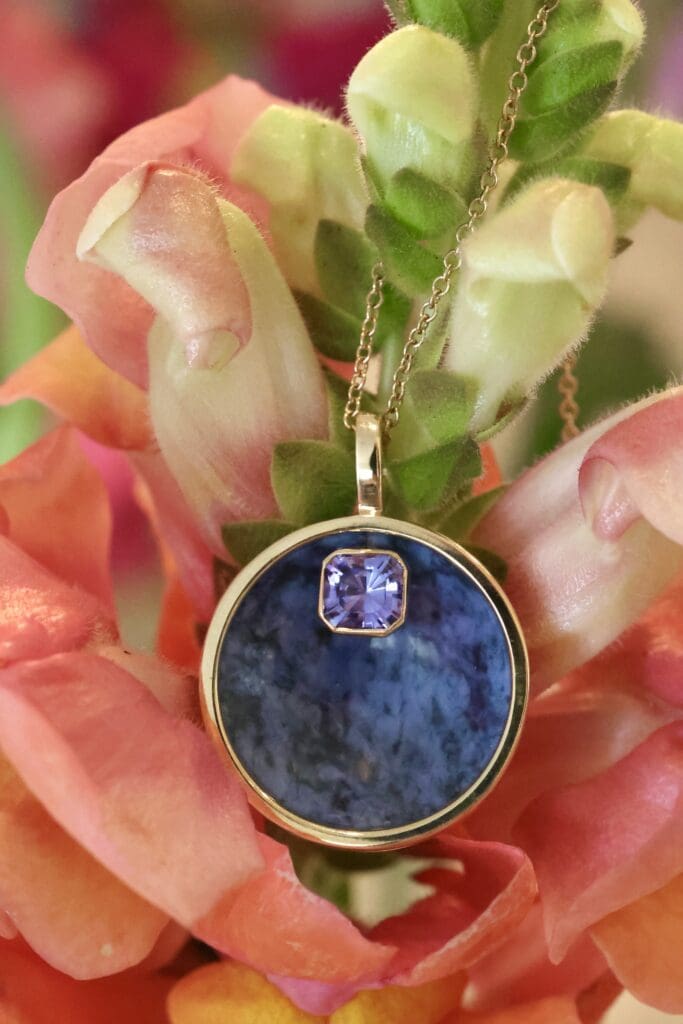
Our Dumortierite and Tanzanite Cauldron Pendant by Mercurius Jewelry. Shown here on our 16 inch 14kt Fairmined yellow gold cable chain.
We sell this unique pendant separately from any chain, so you can pair it with a chain you already own or choose one from our collection. We think it pairs best with a dainty chain so the cauldron becomes the centerpiece and focus.
The purple and blue color palette compliments many outfits, and creates a piece that is modern with a “cool girl” twist.
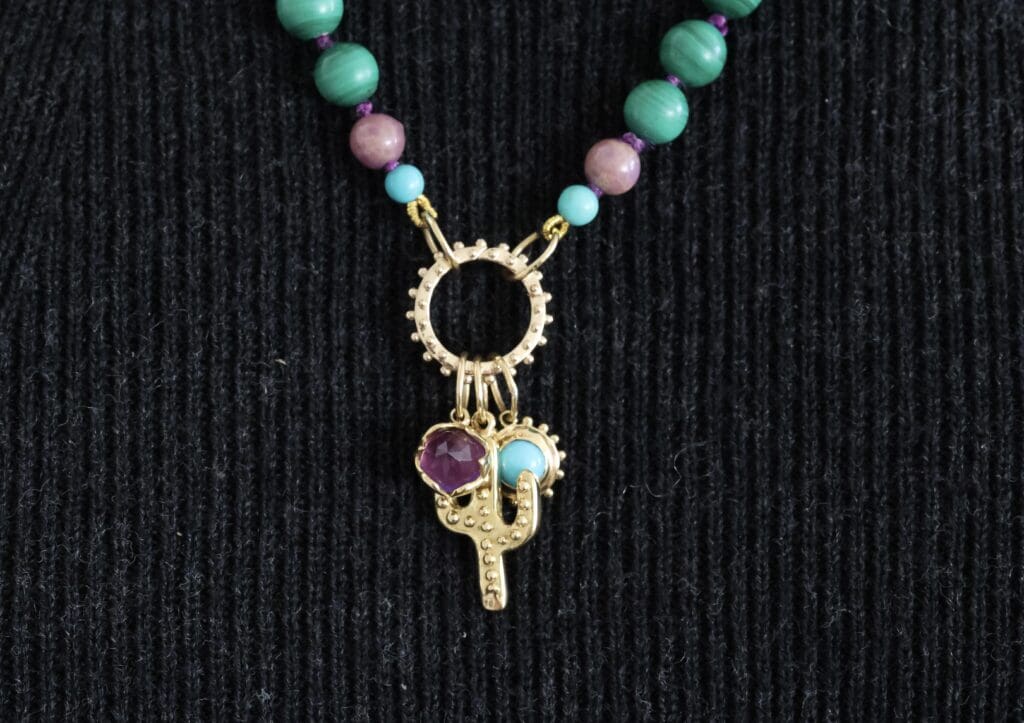
Our Amethyst Lotus, Turquoise Soleil, Cactus Pink Sapphire Charm, Plain Clicker, and Boheme Provence Open Ended Strand by Delphine Leymarie. Photo by Chloe Beaumont.
There’s nothing more fun and customizable than creating your own “charm jumble” aka collection of charms you can style together! Our Delphine Leymarie Charms easily slide onto an open “clicker” connector, which then connects to any of our open-ended bead or metal chain strands.
There are endless possibilities when it comes to charms, and we love the ability to start with one and then collect multiple that you can mix and match depending on your mood or outfit.
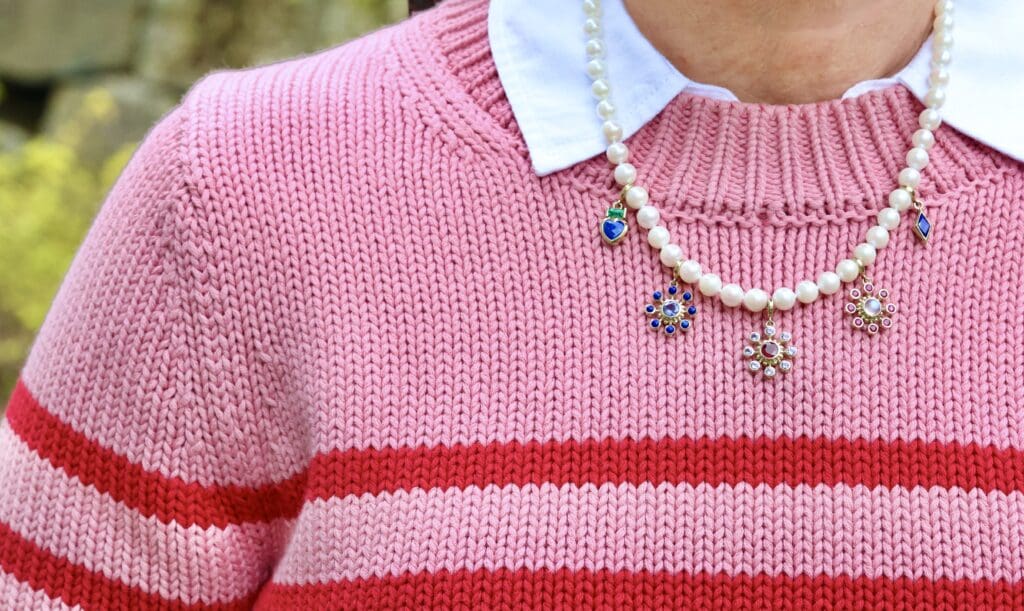
The Akoya Pearl Strand with the Tillya Tepe Heart Charm, Lapis and Sapphire Cosmos Charm, Tanzanite and Ruby Cosmos Charm, Ruby and Moonstone Cosmos Charm, and Zan Charm in Lapis Lazuli. Photo by Chloe Beaumont.
Plus, charms make great gifts if you are shopping for a loved one! The lucky recipient can easily slip them onto their favorite chain or pick out what they’d like to pair it with from our collection. It’s less pressure than buying them a whole necklace when you’re not sure what length or style chain they’d want.
If you’re building your own collection, charms are just the most fun way to add interest to a strand of pearls, (our Mazahri charms have a bail that opens and snaps over pearl knots!) or a piece that would be great for layering.
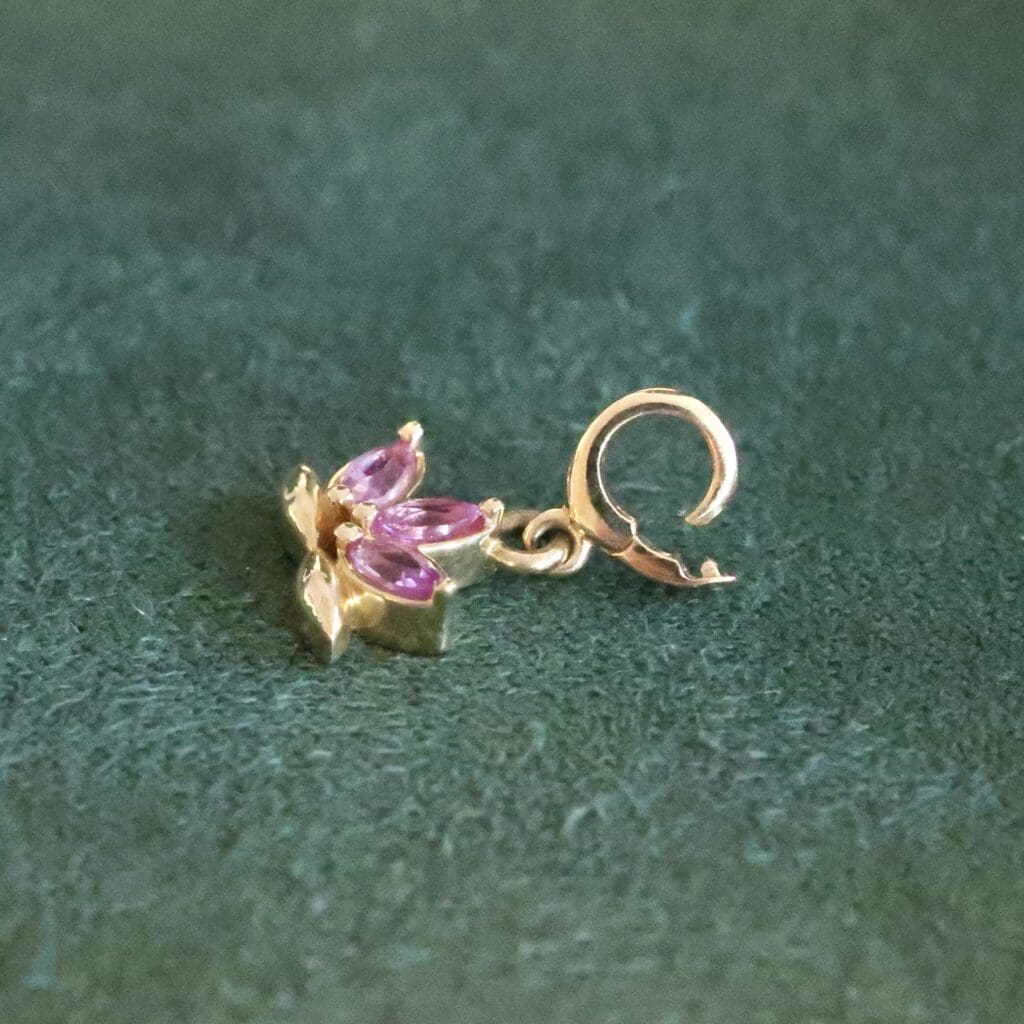
Our Lotus Charm by Mazahri, with the bail open to show how it works. Photo by Chloe Beaumont.
We’ve intentionally curated a collection of charms that can be styled so many different ways, while still giving your look little pops of color. The serpent charm below features a raspberry colored rhodolite garnet from Tanzania. We actually know this gem was mined by a woman and is a traceable “Moyo Gem” sourced from gem supplier ANZA Gems.
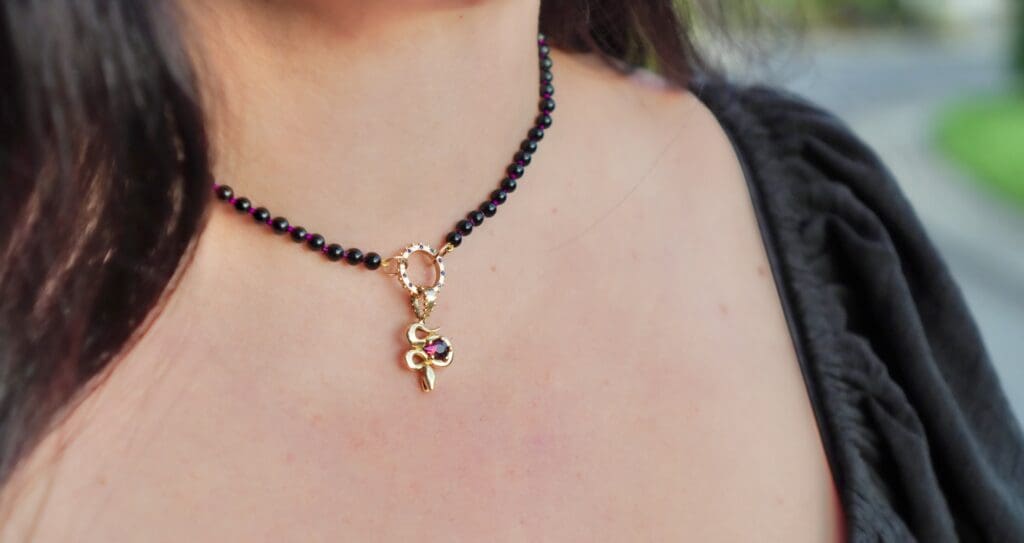
Our Garnet Serpent Charm, Blue Sapphire Clicker, and Onyx Open Ended Bead Strand by Delphine Leymarie. Photo by Morgan Burger.
Each “Moyo Gem” donates a percentage of its sale towards uplifting women miners and their communities in East Africa. So, it’s only natural that designers like Delphine as well as ourselves love to work with these gems!
We truly hope this blog was helpful as you go about building your colored gemstone jewelry collection this year!
Stay sparkling,
~Laura + Chloe Beaumont
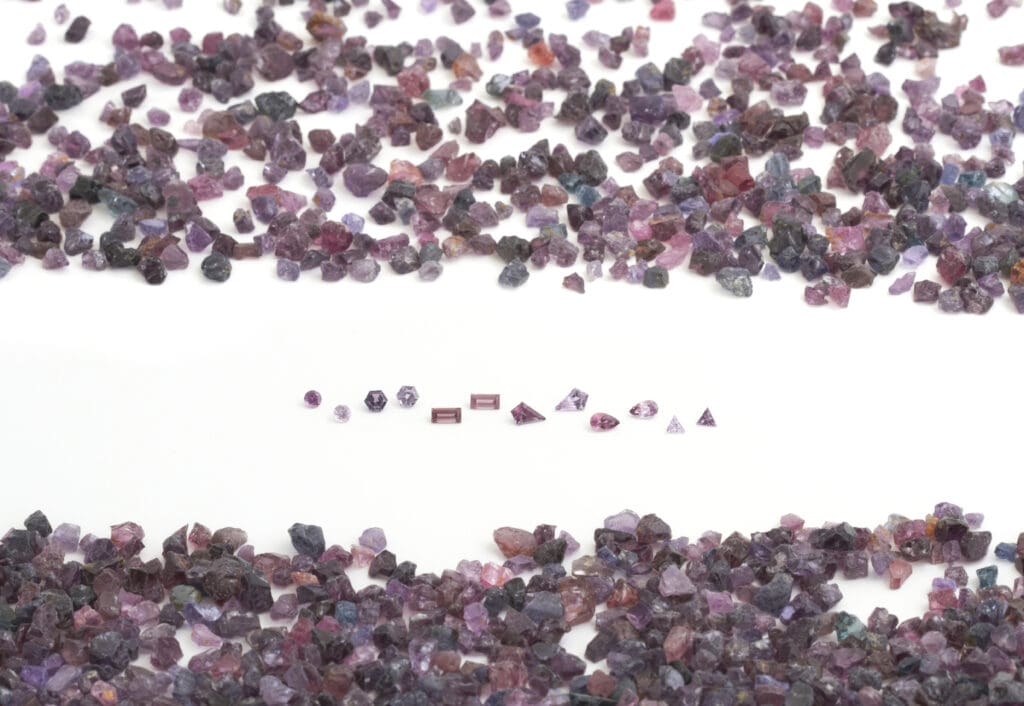
Rough and faceted East African spinels from Columbia Gem House. Photo courtesy of Columbia Gem House.
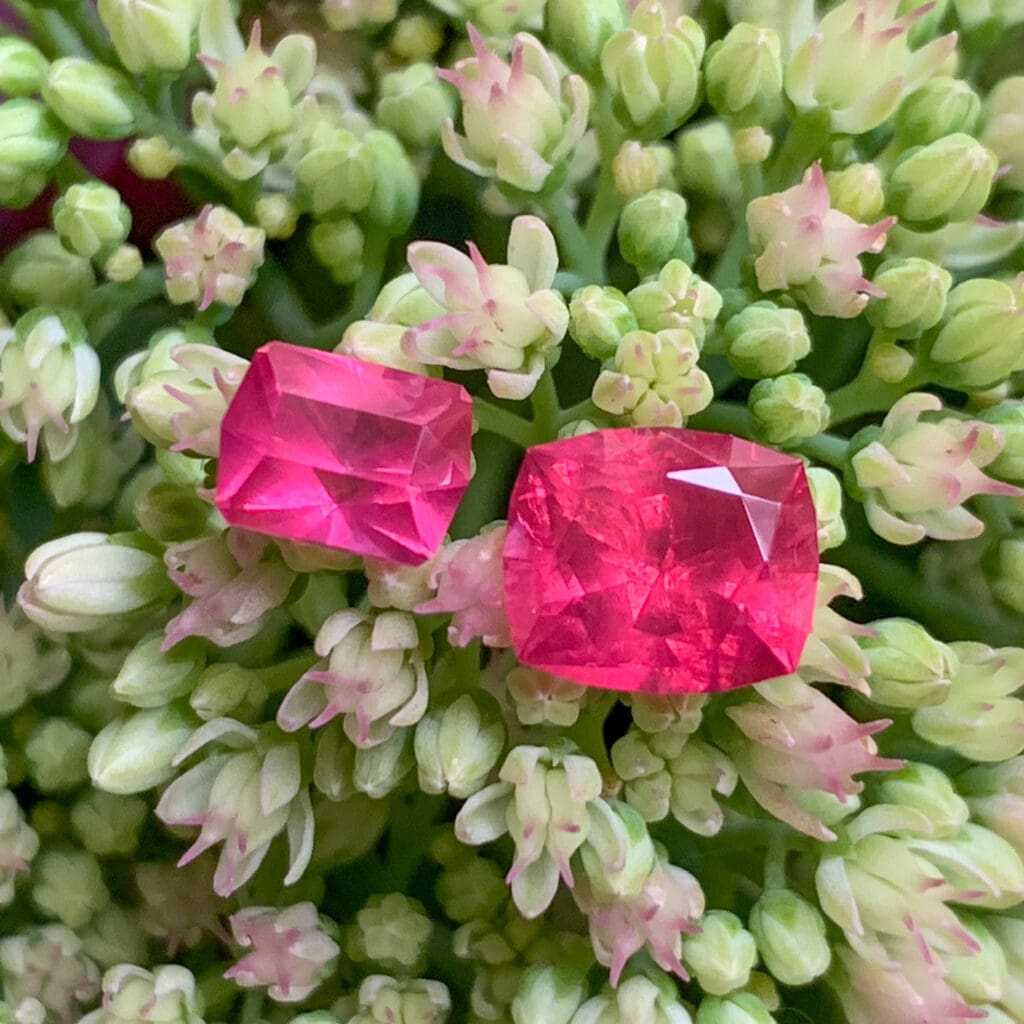
Untreated “Jedi” East African spinels from ANZA gems. Photo courtesy of ANZA Gems.
Yes, those pink spinels you’re seeing in the photo above? One hundred percent natural, straight-outta-the-ground beauty. No treatments needed. Talk about eye candy!
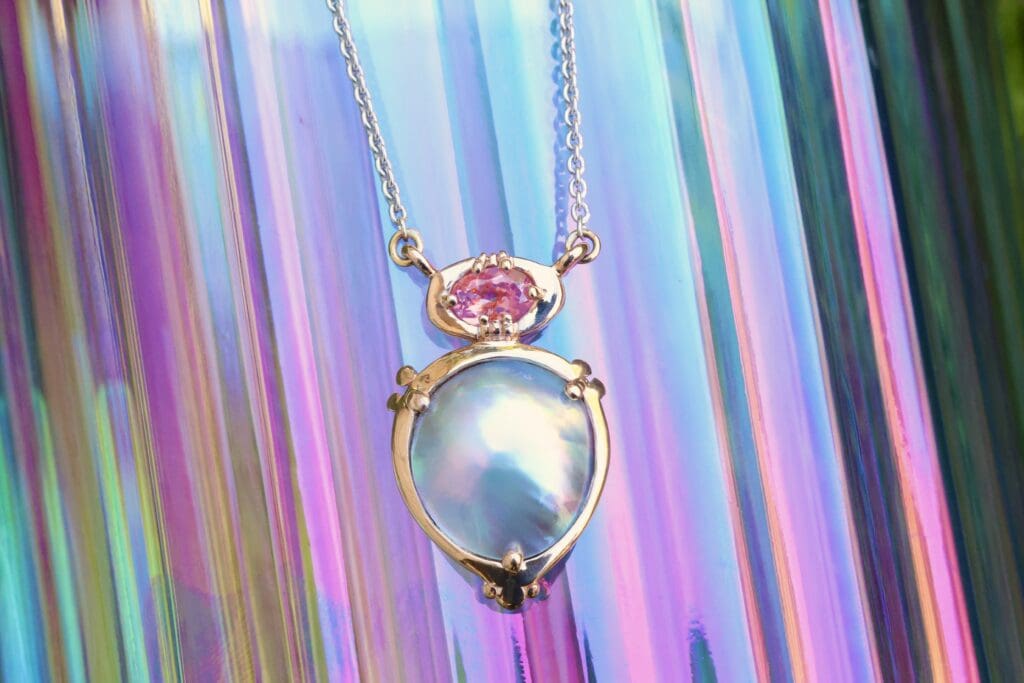
The Spinel and Mabe Cortez Pearl Necklace by Kathe Mai in 14kt rose gold and sterling silver. Photo by Chloe Beaumont.
One of our Kathe Mai necklaces (shown above) features one of those hot pink spinels we love so much, responsibly sourced from Kathe’s gem company Columbia Gem House. We love how it complements the mabé Sea of Cortez pearl by naturally bringing out some of the pink overtones on the pearl.
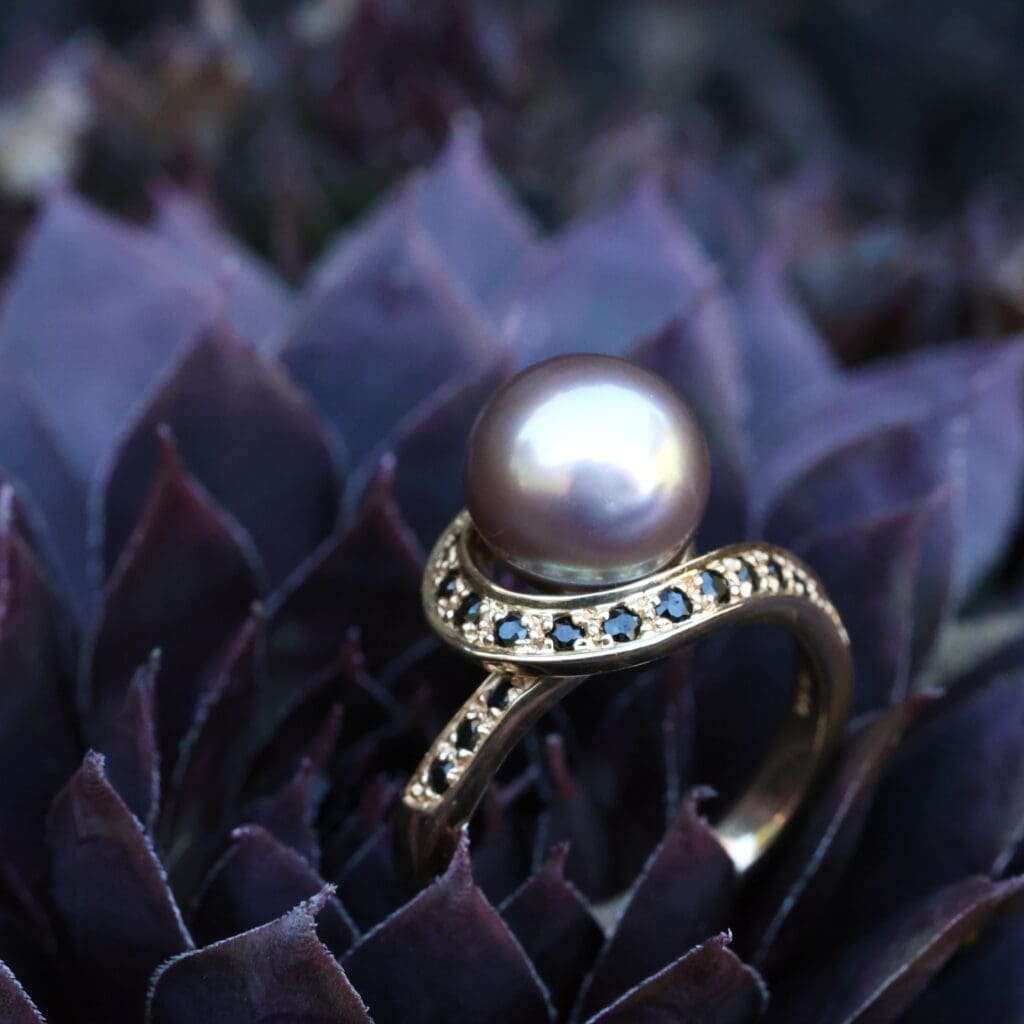
Our Cortez Pearl and Black Spinel Swirl Ring in 14kt yellow gold by Kathe Mai. Photo by Chloe Beaumont.
Black spinel packs an even more moody punch; especially when it’s used as an accent gem around other gems or pearls, like in our ring shown above! We can’t get over how perfectly these little round black spinels swirl around the lavender Cortez pearl, framing it and adding to this pieces’ whimsy and intrigue.
Speaking of color…spinel comes in many different hues, originating from many different localities all around the world! Some of the top spinel producing countries include Myanmar, Tanzania, Cambodia, Vietnam, Sri Lanka, Tajikistan, Australia and Nigeria.
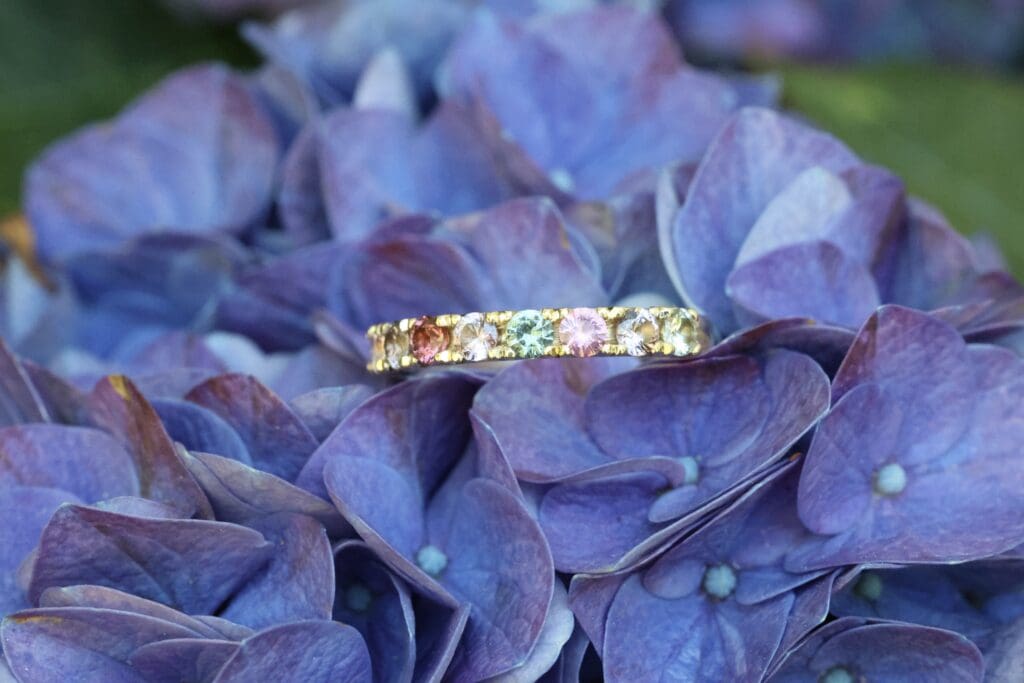
Our Hydrangea Ring with multicolored spinels in 14kt yellow gold designed by Isabel Dennis of KIMA. Photo by Chloe Beaumont.
Spinel comes in teals, blush pinks, cherry reds, grey, lavender and bright blue, to name a few!
Did you know that for a long time in ancient history, red spinels were mistaken for rubies? This was of course before modern day gemology, when people didn’t have the knowledge or tools to help them easily distinguish between the two gemstones.
One of the “rubies” named the Black Prince’s Ruby in the crown jewels of England is actually a giant red spinel!
Red spinel is colored by chromium, one of the same trace elements that gives ruby its color. Thankfully, both my mom and I are GIA Graduate Gemologists and can conduct all the necessary tests in our office to separate between ruby and spinel!
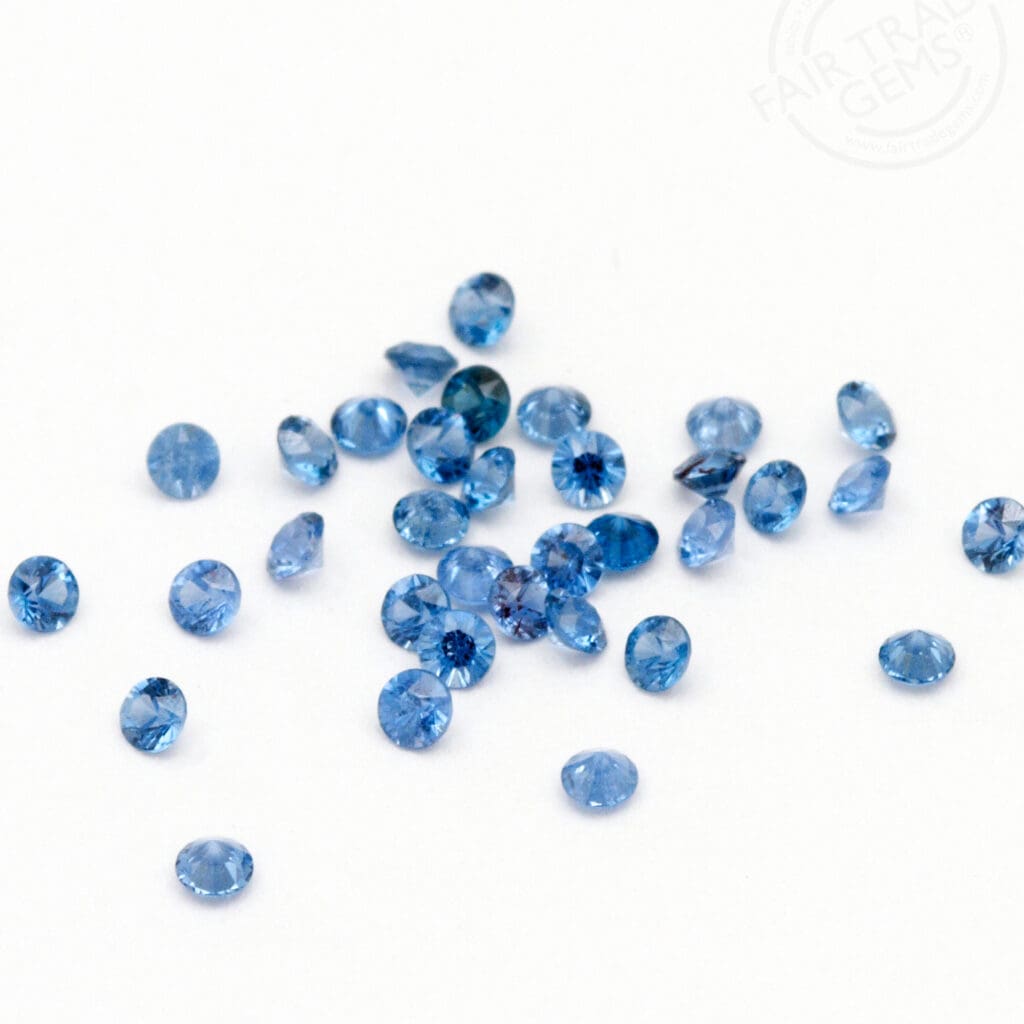
Little round blue Cambodian spinels from one of our gem suppliers Columbia Gem House. Photo courtesy of Columbia Gem House.
Plus, it’s the birthstone for August babies (those of you who don’t particularly like your other birthstone Peridot can breathe a sigh of relief!)
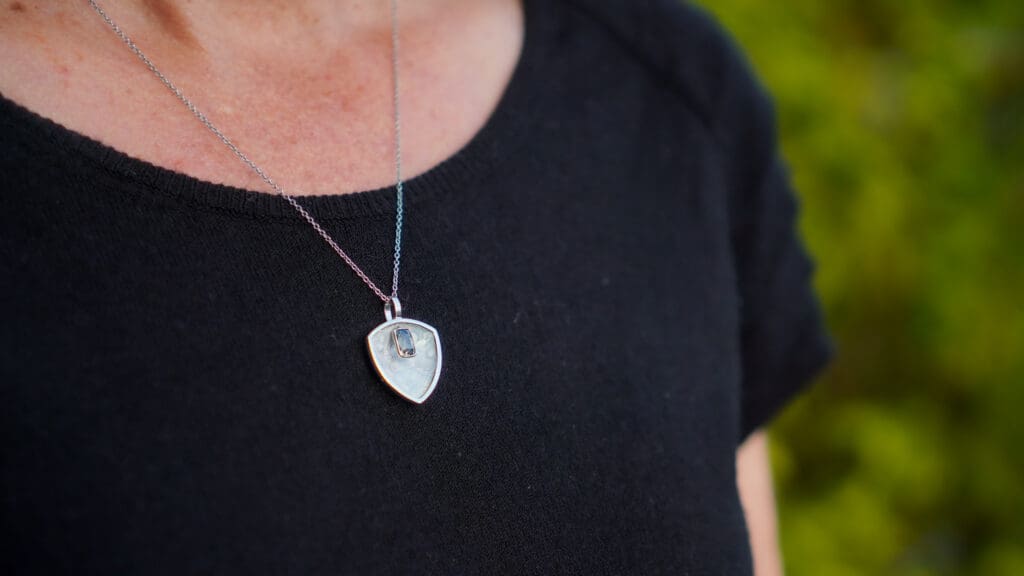
Our Luna Agate and Grey Spinel necklace by Mercurius, set in platinum. Photo by Morgan Burger.
Spinel, like the grey one shown above, ranks an 8 out of 10 on the Moh’s Hardness Scale. This means that it’s durable enough for everyday wear whether you go with a ring, necklace, or earrings.
It’s worth mentioning that all the spinels you’ll find in our jewelry are natural; there are many lab-grown spinels out there on the market that are used to imitate other natural gemstones. We’re not judging if you own one of these gems, but here at BJC we opt for the natural version- with all the colors available to us and our designers, we simply see no need to choose anything else.
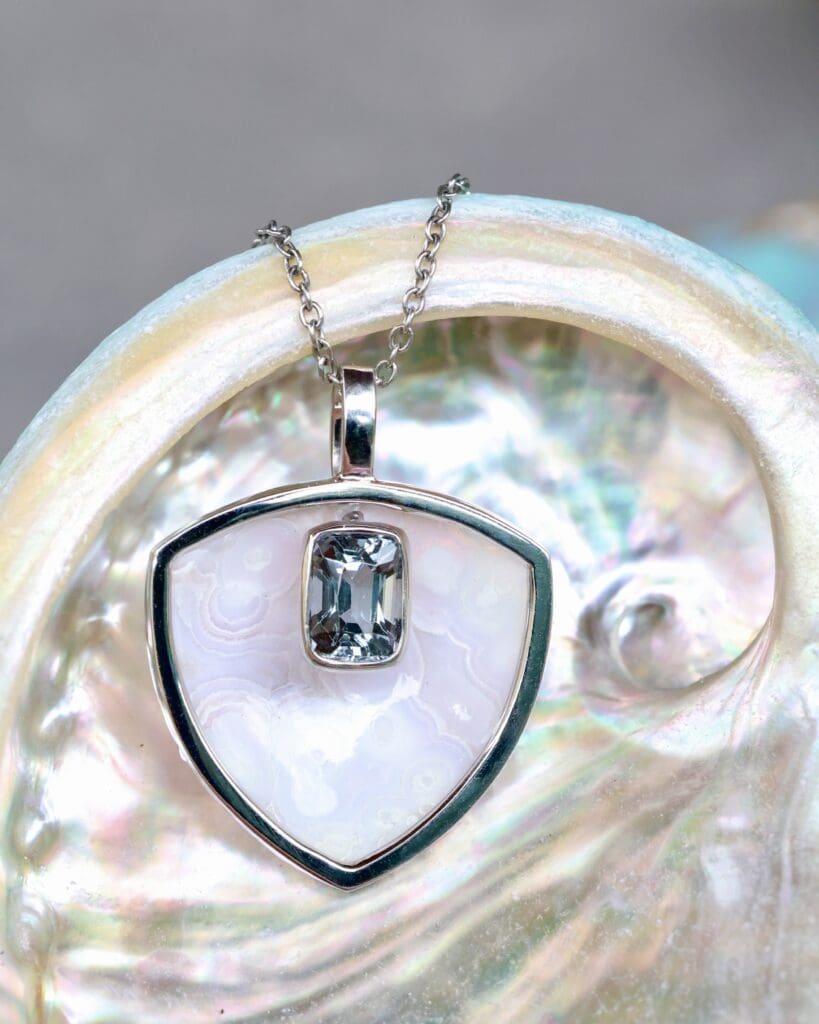
Our Luna Agate and Grey Spinel necklace by Mercurius, chain included. Photo by Chloe Beaumont.
We are lucky to have curated a bunch of pieces featuring this massively underrated gemstone, and we can’t wait to add more to our collection for you!
We hope you enjoyed learning more about this gemstone and that your appreciation for it has grown!
Shop our Pieces Featuring Spinel HERE.
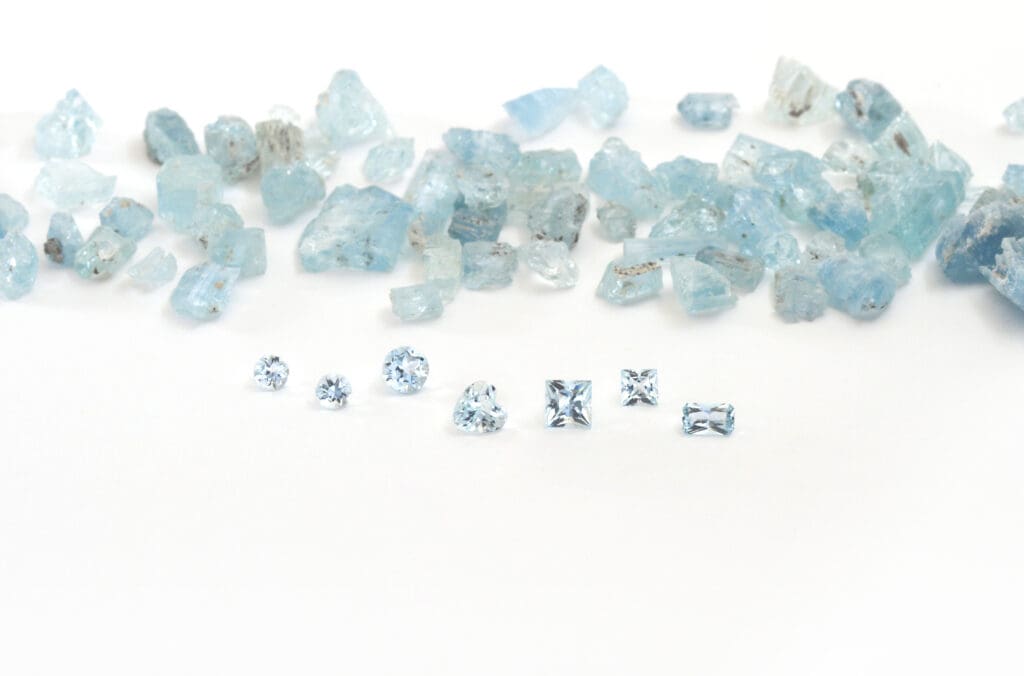
At a glance: the sea blue variety of the mineral species Beryl, March's birthstone Aquamarine with its soothing hues has historically been a crowd pleaser.
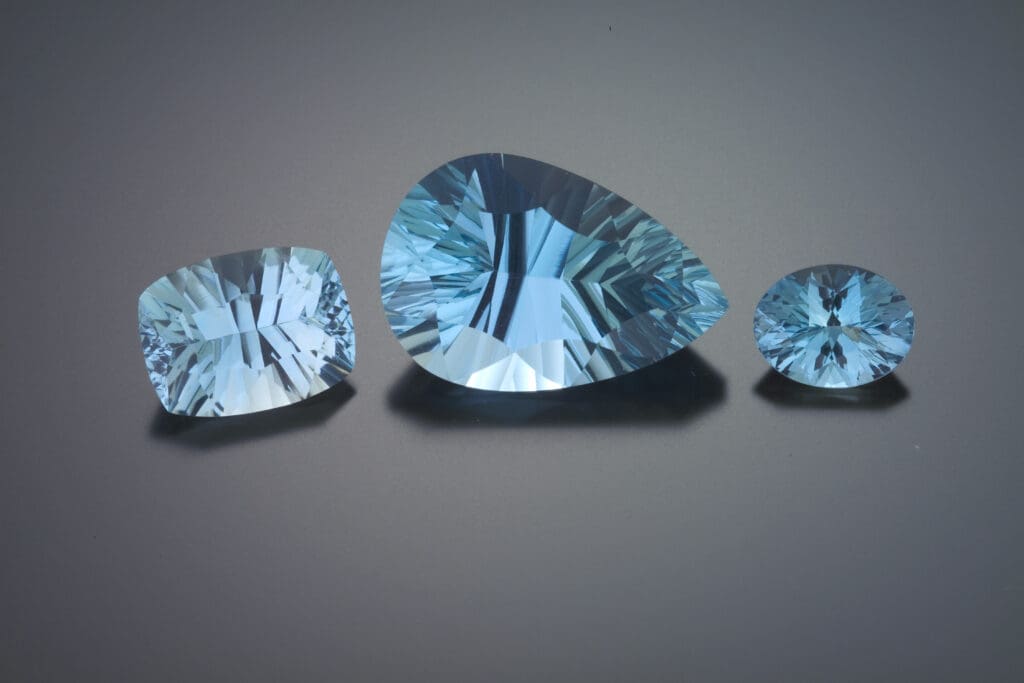
Color
Aquamarine (meaning "seawater" in Latin) comes in shades of light, pastel blue all the way to deep saturated aqua, sometimes with a strong greenish tint. Its gorgeous hues reminds us of the crystal clear waters of the Caribbean!
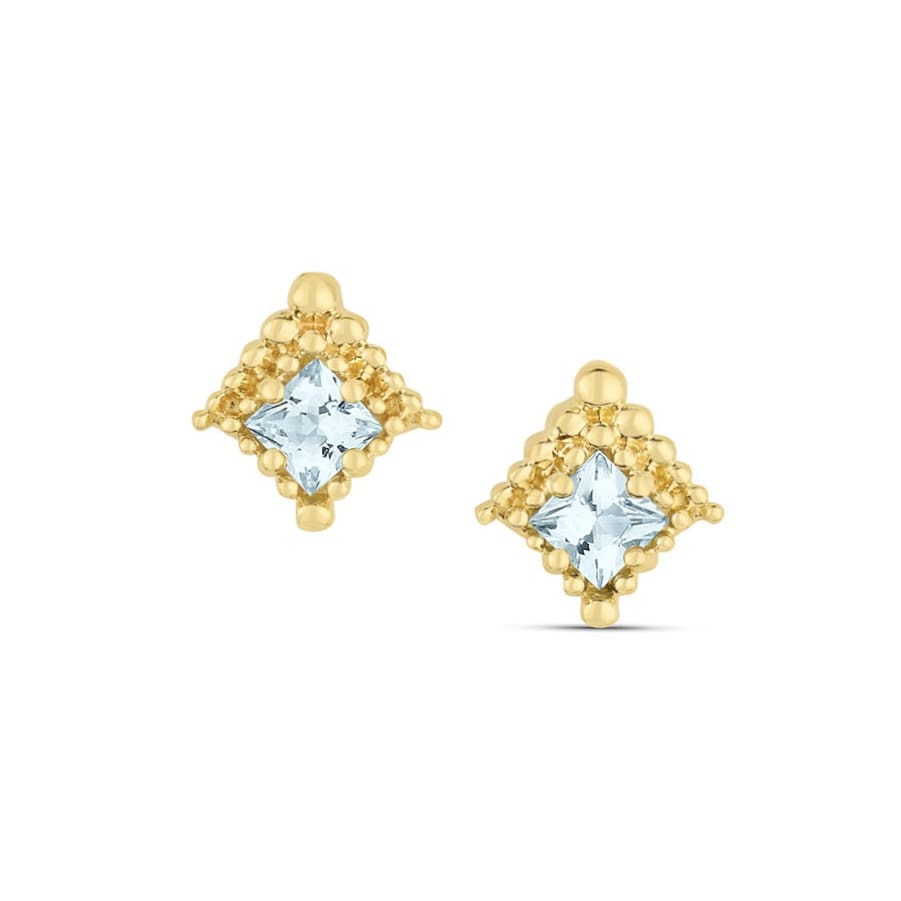
Durability
Aquamarines are a 7.5-8 on the Moh's Scale of Hardness, making them durable enough for daily wear. They are not as hard as diamonds and sapphires, however, so they are a bit more susceptible to scratching. If you own an aquamarine ring, exercise more caution when wearing it than you would with diamond rings. Using warm water and mild soap on aquamarines is always fine. You should double check to make sure your aquamarine doesn't have any surface-reaching fractures or large inclusions before submerging it in an ultrasonic cleaner.
Symbolism and History
In the ancient past, mariners and sailors believed that aquamarine would protect calm waves and protect them while they were at sea. According to Greek mythology, Aphrodite adorned her daughter's hair with aquamarines as an expression of divine love. Aquamarine later became a popular bridal gift as it was thought to bring happiness in marriage. In color psychology, blue is often recognized as one of the most tranquil colors that is known to reduce stress and even lower your heart rate!
Where Aquamarines Are Found
Aquamarines can grow in massive crystals and is found in many different places all over the world. Brazil and Pakistan are two top producing countries, along with Kenya, Madagascar, Nigeria, Zambia and Mozambique. Did you know we even have American Aquamarine that comes from mines in Colorado?
We love this clear, dreamy colored gemstone jewelry here at BJC and can't wait to add more Aquamarine pieces to our collection!
Garnet’s stunning varieties are so underrated in our opinion, even though awareness about these juicy gems has been expanding!
Reason #1 why garnets are underrated: some garnets have even greater color dispersion than diamonds!
Demantoid garnet, the most highly sought after type of andradite garnet, has better color dispersion aka “fire” due to its high refractive index and specific chemical composition. It simply splits white light into spectral colors more effectively! On top of that, demantoid garnet becomes even more valuable when it contains a special “horsetail inclusion” that resembles….you guessed it, a horse’s tail.
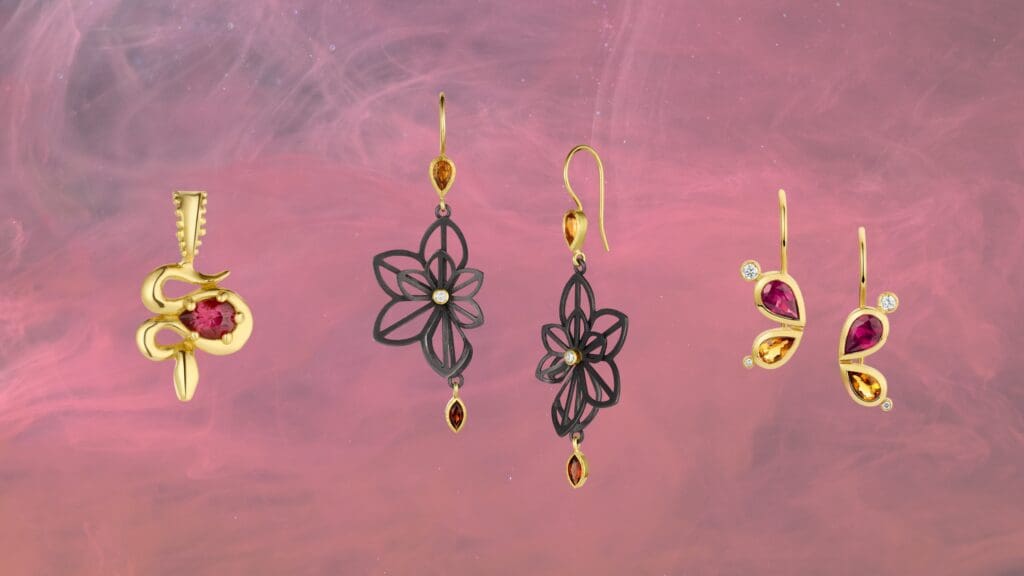
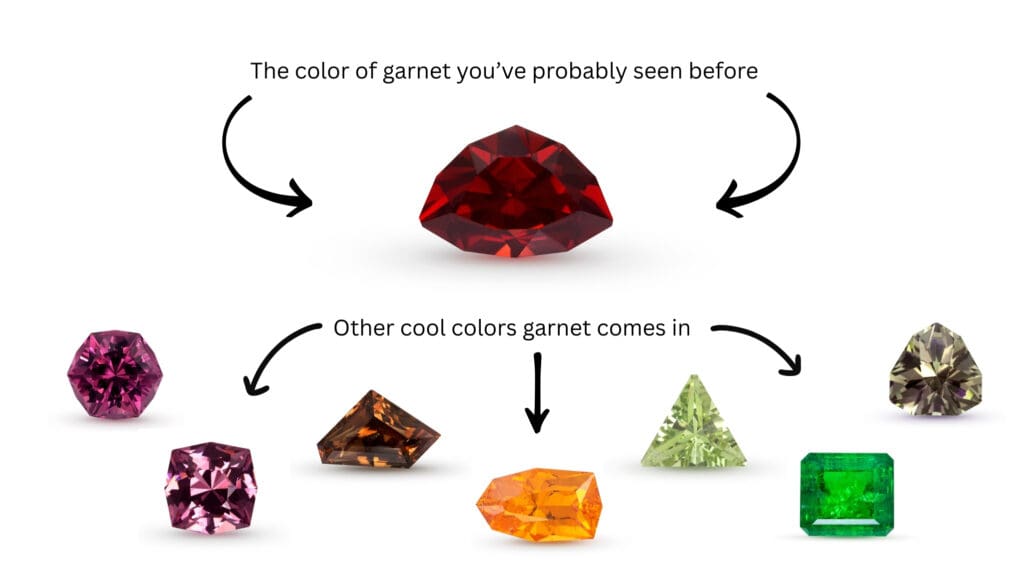
Reason #2 why garnets are underrated: garnets come in SO many different hues!
You might associate garnet with the color red, but in reality garnets come in 15 different species that produce gorgeous neon oranges, raspberry and blush pinks, vivid greens, honey brown, lemon yellow and even uber rare color change blue-to-purple.
Whether you are into raspberry-colored rhodolite (such as the garnets shown in the 3 pieces of jewelry we’ve curated above) or punchy green tsavorite that almost looks like an emerald, or more subdued pink malaya…garnet has got you covered.
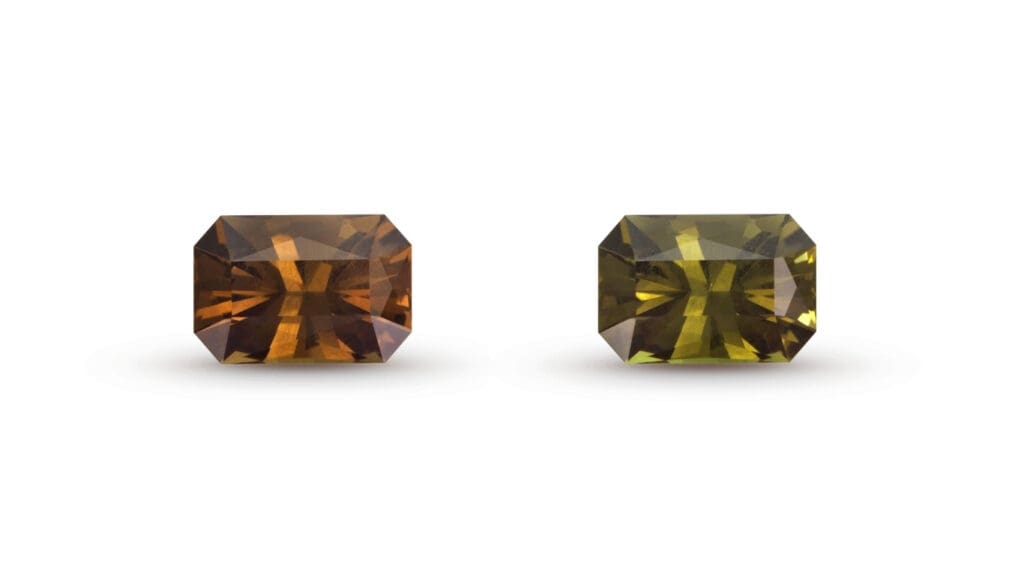
Reason #3 why garnets are underrated: some garnets are color-change, meaning they can show two completely different colors under different lighting conditions!
Not all gemstones can exhibit color change, which makes the ones that do rare and special. This phenomenon is completely natural, and many of these garnets are actually a blend of multiple garnet species. Garnets can show blue-to-violet, pink-to-purple, brown-to-green, purple-to-red, and even teal-to-purple. East Africa, where one of our awesome suppliers ANZA Gems sources from, is known to produce top quality color changing garnets. Owning a color-change gemstone is like having two gems in one!
Garnet is simply a downright versatile, endlessly interesting, fun gemstone. We are convinced the more varieties you see of them, the more you'll fall in love with them!