
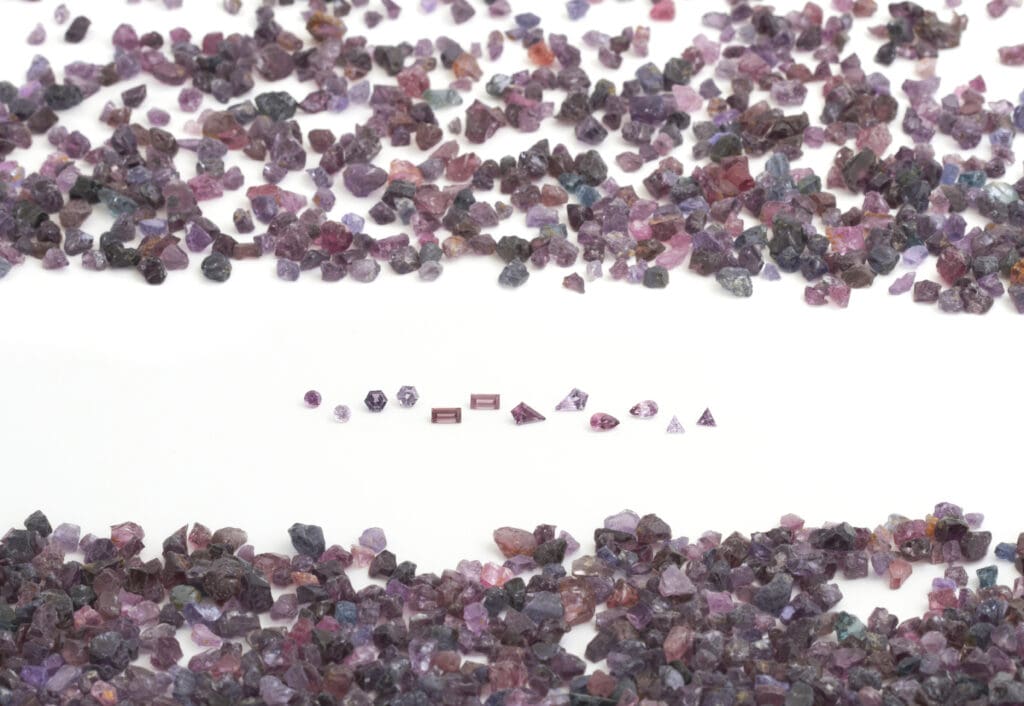
Rough and faceted East African spinels from Columbia Gem House. Photo courtesy of Columbia Gem House.
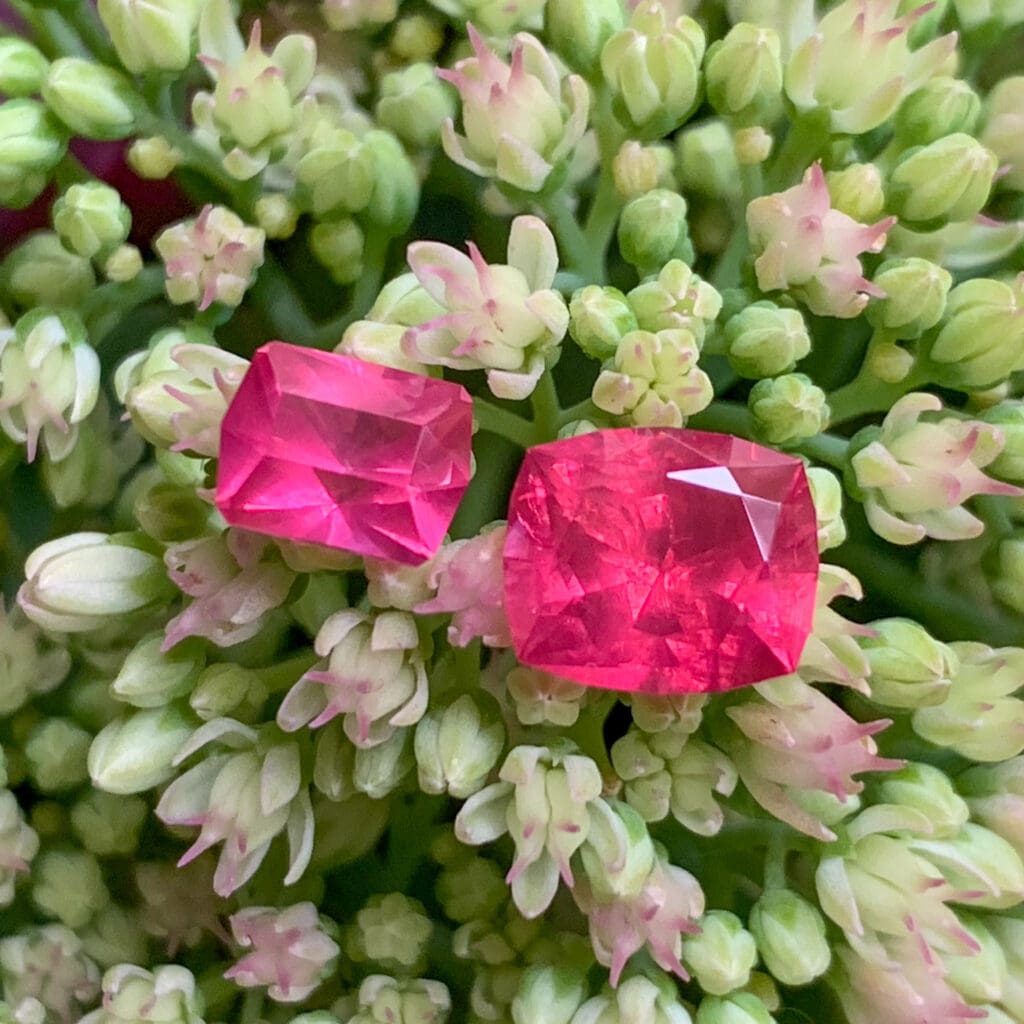
Untreated “Jedi” East African spinels from ANZA gems. Photo courtesy of ANZA Gems.
Yes, those pink spinels you’re seeing in the photo above? One hundred percent natural, straight-outta-the-ground beauty. No treatments needed. Talk about eye candy!
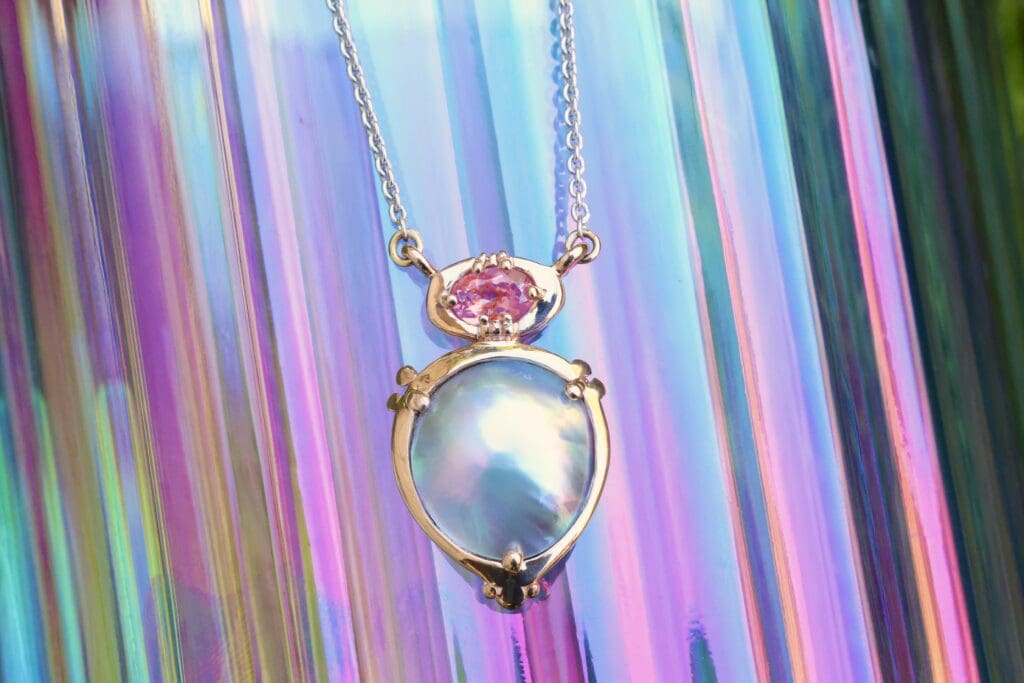
The Spinel and Mabe Cortez Pearl Necklace by Kathe Mai in 14kt rose gold and sterling silver. Photo by Chloe Beaumont.
One of our Kathe Mai necklaces (shown above) features one of those hot pink spinels we love so much, responsibly sourced from Kathe’s gem company Columbia Gem House. We love how it complements the mabé Sea of Cortez pearl by naturally bringing out some of the pink overtones on the pearl.
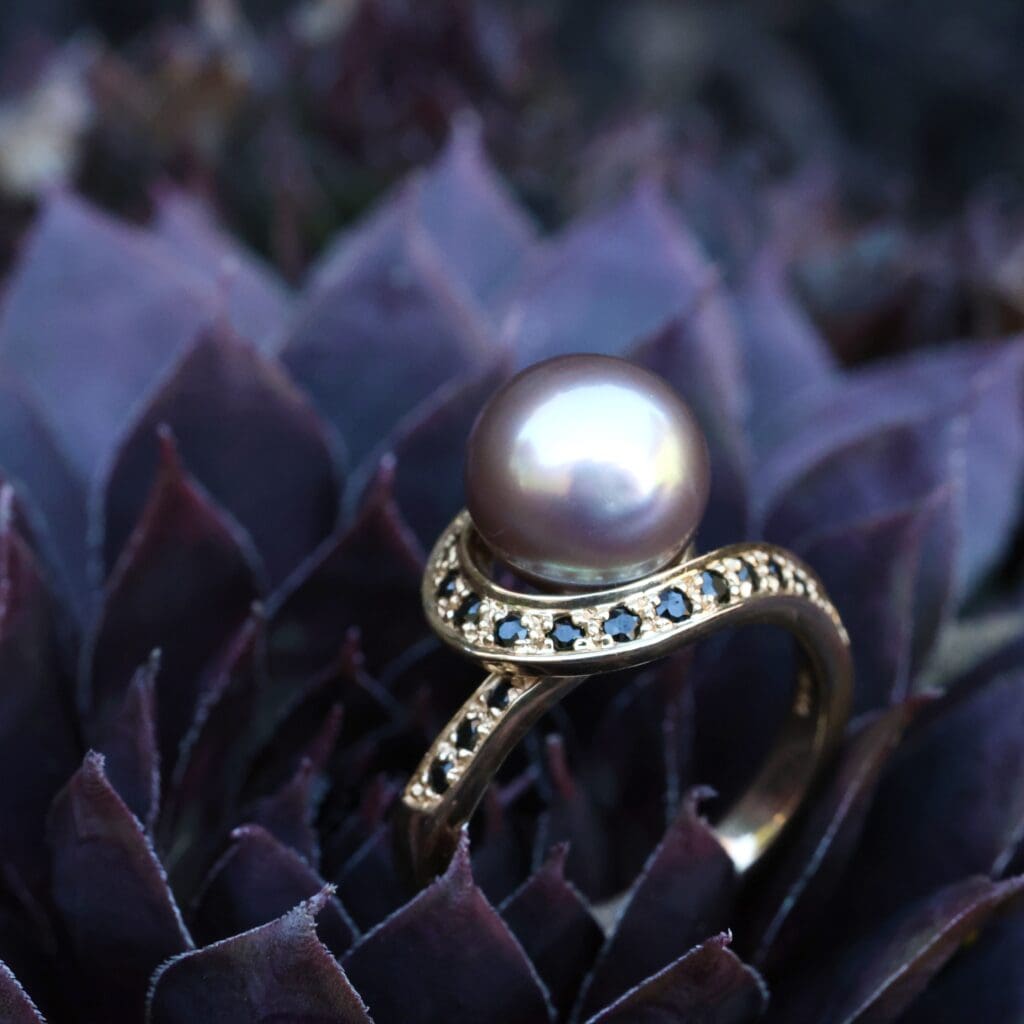
Our Cortez Pearl and Black Spinel Swirl Ring in 14kt yellow gold by Kathe Mai. Photo by Chloe Beaumont.
Black spinel packs an even more moody punch; especially when it’s used as an accent gem around other gems or pearls, like in our ring shown above! We can’t get over how perfectly these little round black spinels swirl around the lavender Cortez pearl, framing it and adding to this pieces’ whimsy and intrigue.
Speaking of color…spinel comes in many different hues, originating from many different localities all around the world! Some of the top spinel producing countries include Myanmar, Tanzania, Cambodia, Vietnam, Sri Lanka, Tajikistan, Australia and Nigeria.
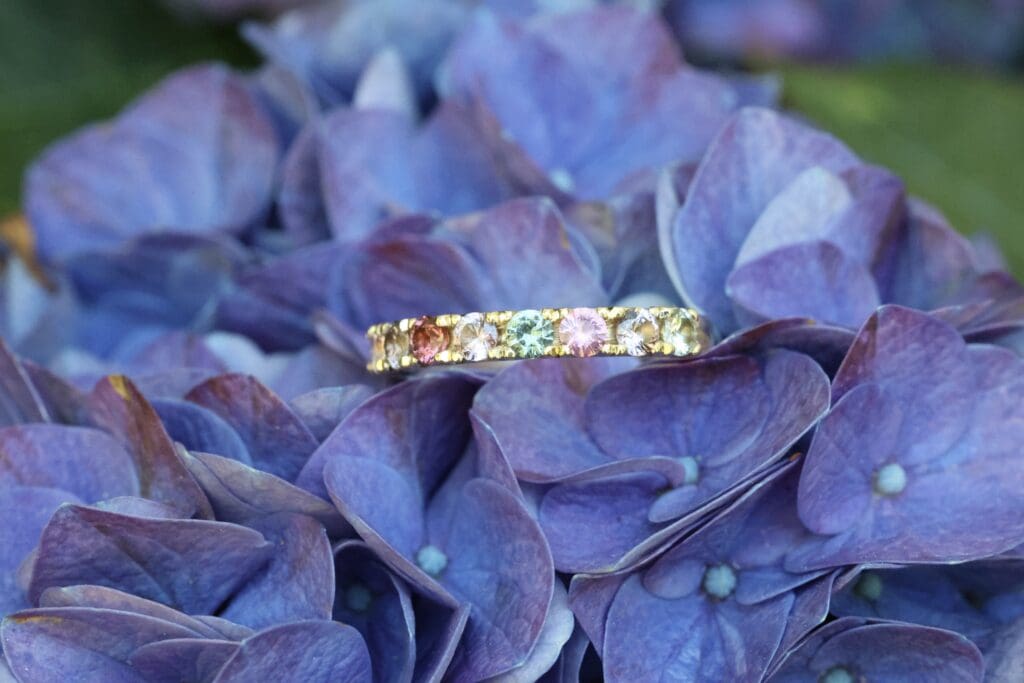
Our Hydrangea Ring with multicolored spinels in 14kt yellow gold designed by Isabel Dennis of KIMA. Photo by Chloe Beaumont.
Spinel comes in teals, blush pinks, cherry reds, grey, lavender and bright blue, to name a few!
Did you know that for a long time in ancient history, red spinels were mistaken for rubies? This was of course before modern day gemology, when people didn’t have the knowledge or tools to help them easily distinguish between the two gemstones.
One of the “rubies” named the Black Prince’s Ruby in the crown jewels of England is actually a giant red spinel!
Red spinel is colored by chromium, one of the same trace elements that gives ruby its color. Thankfully, both my mom and I are GIA Graduate Gemologists and can conduct all the necessary tests in our office to separate between ruby and spinel!
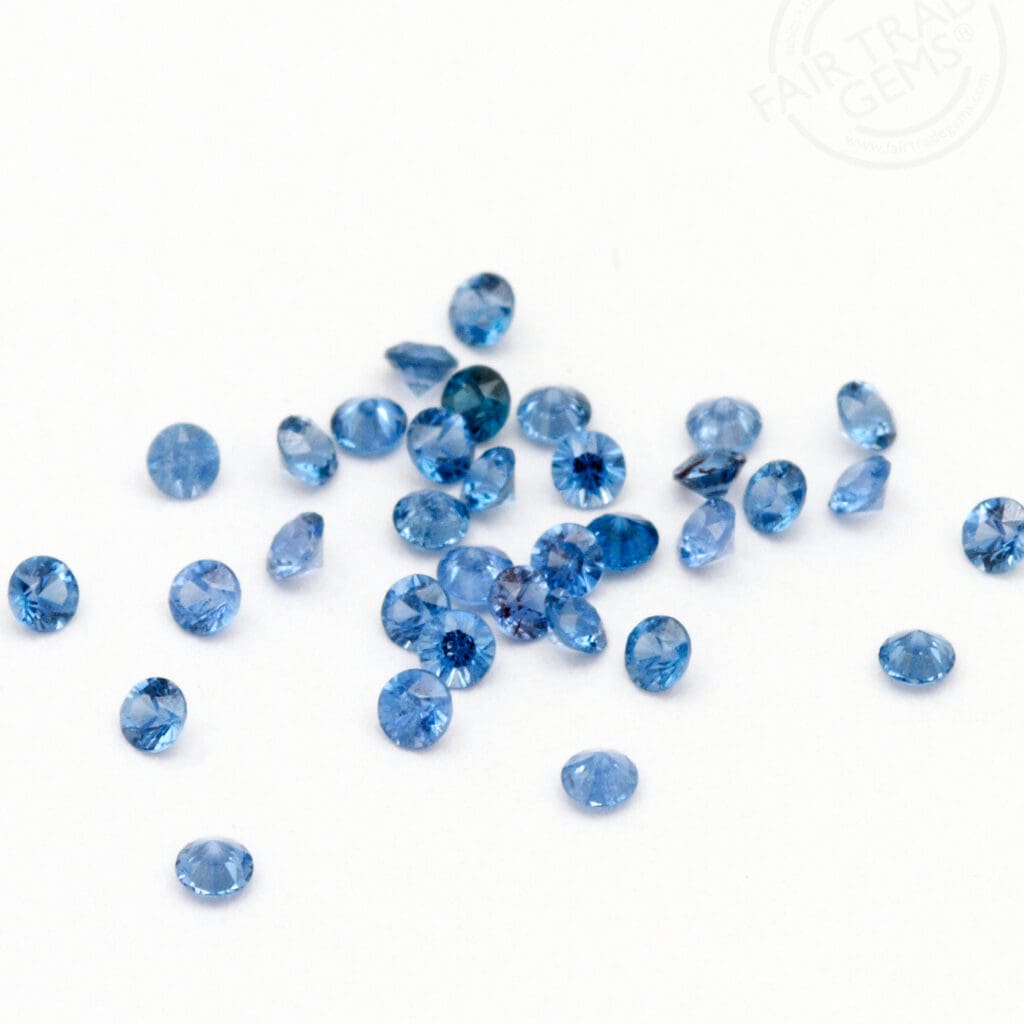
Little round blue Cambodian spinels from one of our gem suppliers Columbia Gem House. Photo courtesy of Columbia Gem House.
Plus, it’s the birthstone for August babies (those of you who don’t particularly like your other birthstone Peridot can breathe a sigh of relief!)
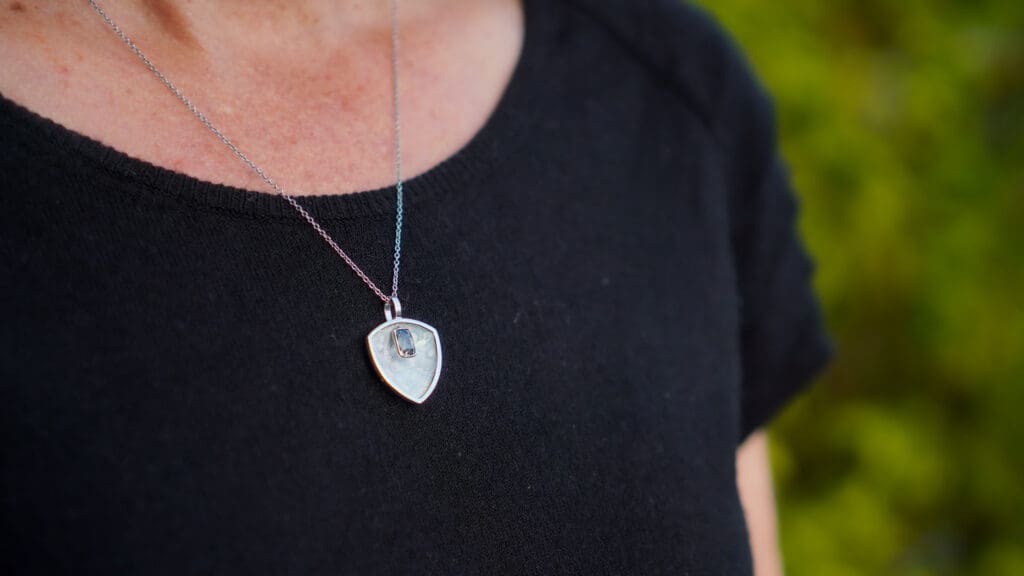
Our Luna Agate and Grey Spinel necklace by Mercurius, set in platinum. Photo by Morgan Burger.
Spinel, like the grey one shown above, ranks an 8 out of 10 on the Moh’s Hardness Scale. This means that it’s durable enough for everyday wear whether you go with a ring, necklace, or earrings.
It’s worth mentioning that all the spinels you’ll find in our jewelry are natural; there are many lab-grown spinels out there on the market that are used to imitate other natural gemstones. We’re not judging if you own one of these gems, but here at BJC we opt for the natural version- with all the colors available to us and our designers, we simply see no need to choose anything else.
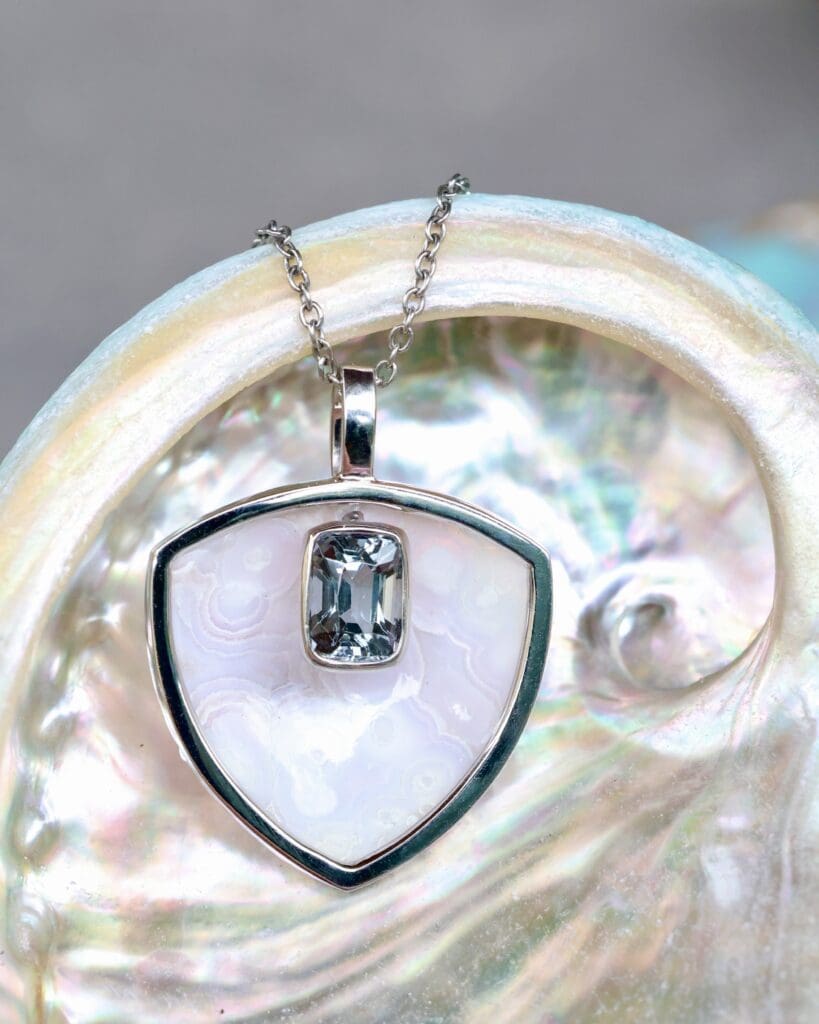
Our Luna Agate and Grey Spinel necklace by Mercurius, chain included. Photo by Chloe Beaumont.
We are lucky to have curated a bunch of pieces featuring this massively underrated gemstone, and we can’t wait to add more to our collection for you!
We hope you enjoyed learning more about this gemstone and that your appreciation for it has grown!
Shop our Pieces Featuring Spinel HERE.
We think this semiprecious, glowy stunner is quite underrated, and we hope after reading this blog you’ll agree!
Reason #1 Why Carnelian is Underrated: Carnelian is a type of Chalcedony that can actually be found in the US in places like the Oregon Coast (where we found some), Washington, Montana and Arizona.
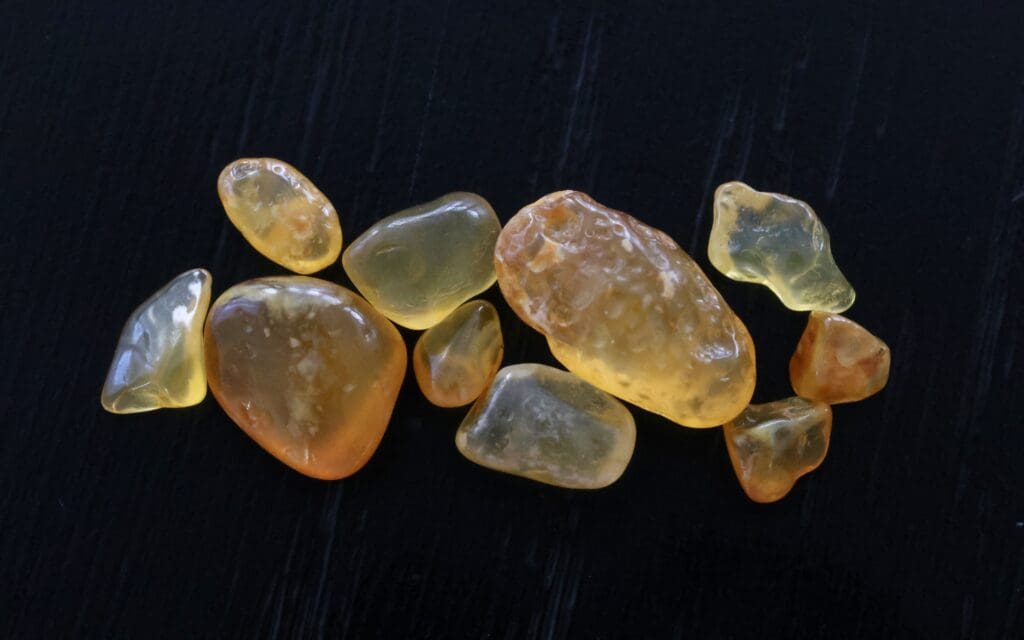
“Carnelian” is the trade name for when Chalcedony is orange, translucent, and evenly colored without any banding. If there are bands or white swirls present, then it gets called Agate.
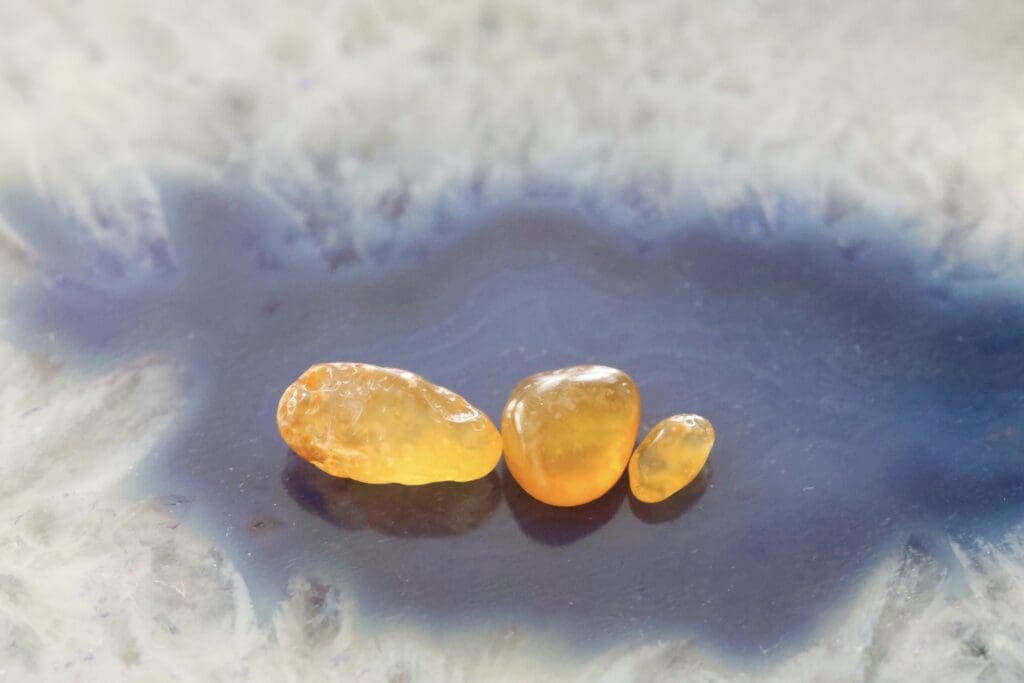
Reason #2 Why Carnelian is Underrated: When you buy Carnelian jewelry, you can get the sunny, saturated orange color you want without feeling like your bank account was just ransacked.
Carnelian is the most affordable type of Chalcedony, but still glows just as nicely as an orange sapphire or spessartine garnet (the latter of which has risen dramatically in price and popularity lately!)
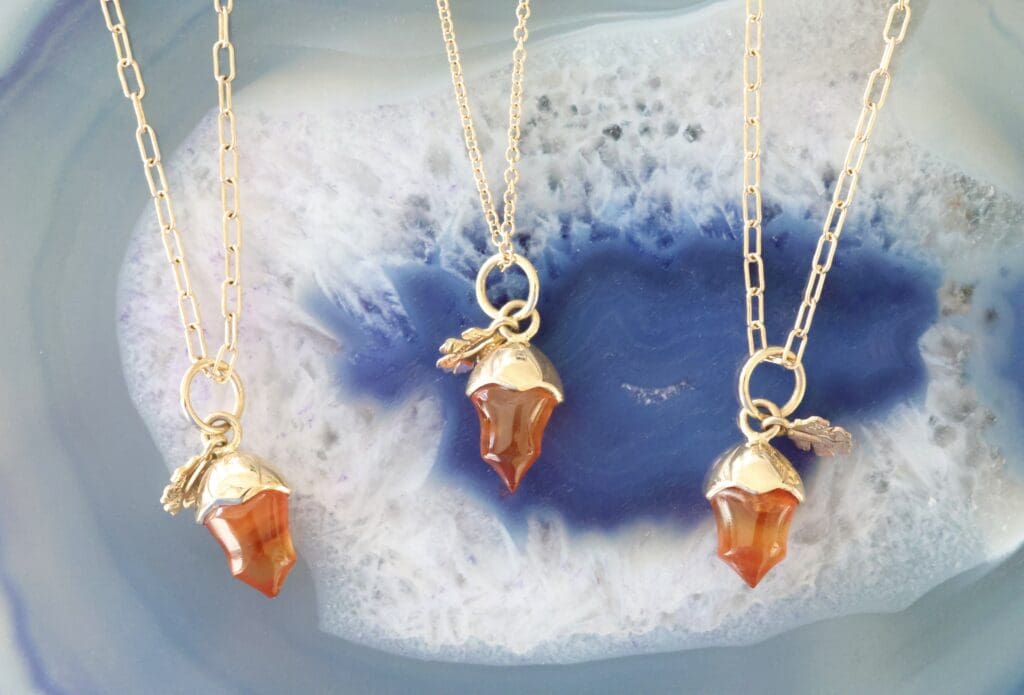
David and Alisa, the husband-and-wife duo behind Mercurius Jewelry, designed these adorable Mini Acorn Charms for you as a Beaumont Jewelry Collective exclusive. Each one has a little gold leaf and a unique Carnelian that was hand-carved by Dave himself, who is a master lapidarist.
They are pictured here on our Fairmined gold cable and paperclip chains, but we honestly think they’d be cute on any chain and would bring some warmth to your jewelry collection.
Reason #3 Why Carnelian is Underrated: It glows like fire in sunlight!
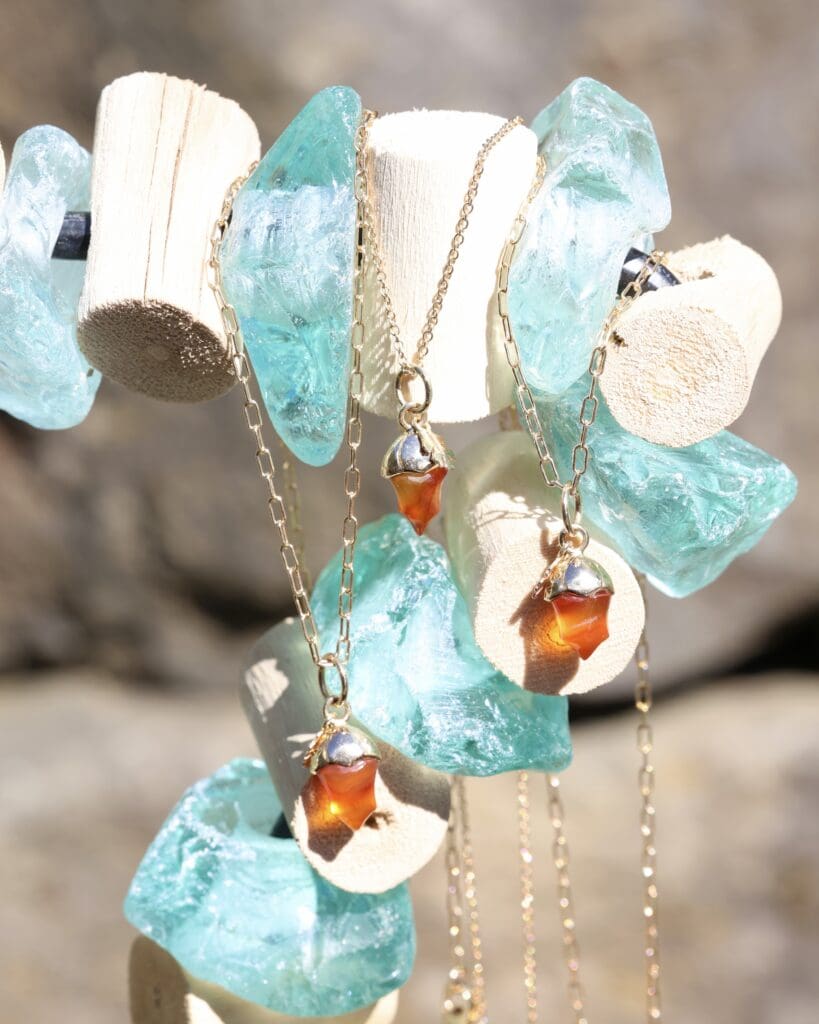
If you thought Carnelian was pretty in that indoor photo, just look at how they glow in the sunlight!!
We can totally understand why the ancient Indians who built the Taj Mahal called Carnelian “the fire stone.” Carnelian gets its orange hue from iron oxide found in its trace inclusions from when the stone was forming. In Arab tradition, Carnelian was considered a stone for the kings due to its association with fire and having a protective, proactive energy.
Would you wear a Carnelian necklace? We hope this interesting gem grows on you just like it has on us!
At a glance: the sea blue variety of the mineral species Beryl, March's birthstone Aquamarine with its soothing hues has historically been a crowd pleaser.
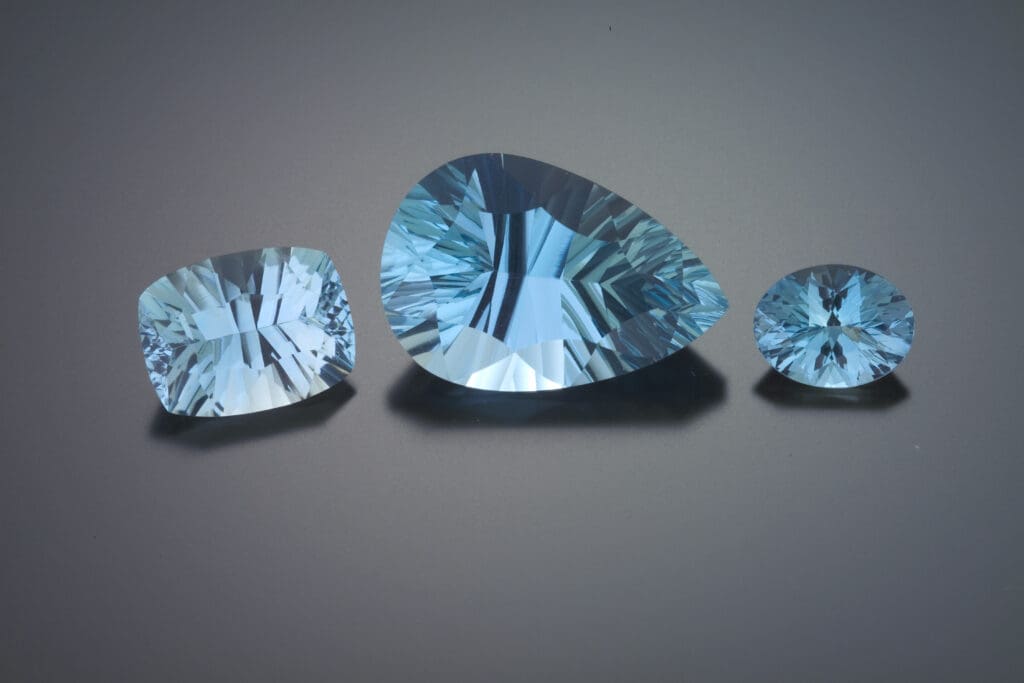
Color
Aquamarine (meaning "seawater" in Latin) comes in shades of light, pastel blue all the way to deep saturated aqua, sometimes with a strong greenish tint. Its gorgeous hues reminds us of the crystal clear waters of the Caribbean!
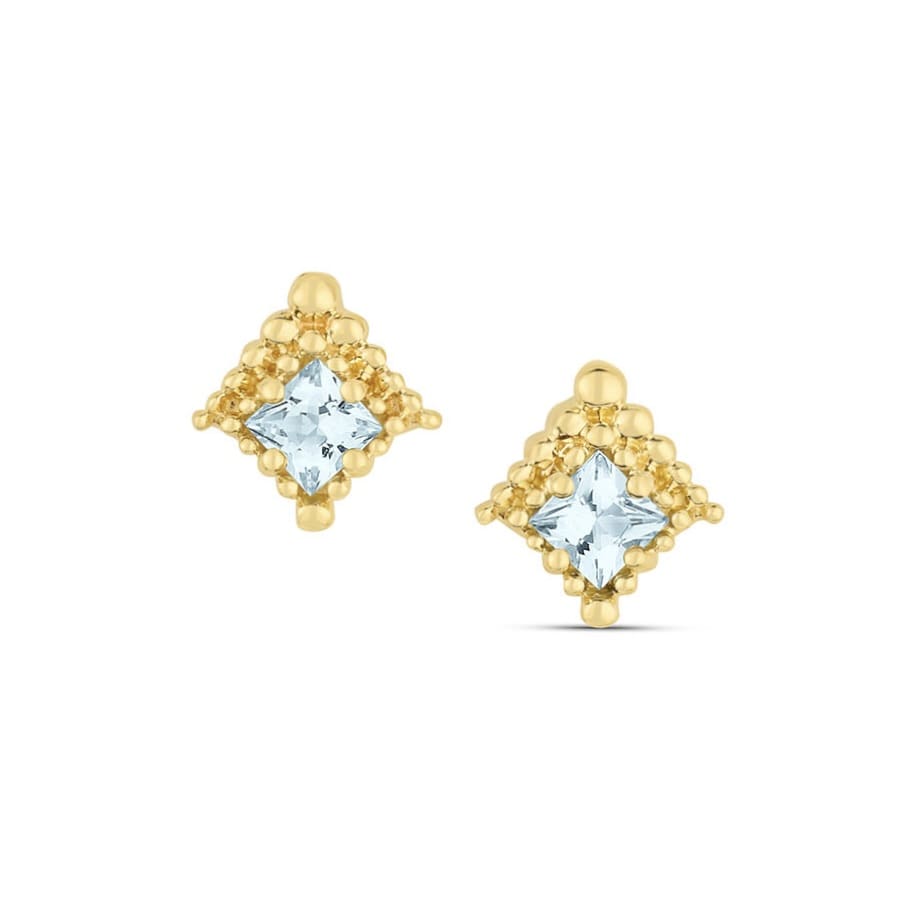
Durability
Aquamarines are a 7.5-8 on the Moh's Scale of Hardness, making them durable enough for daily wear. They are not as hard as diamonds and sapphires, however, so they are a bit more susceptible to scratching. If you own an aquamarine ring, exercise more caution when wearing it than you would with diamond rings. Using warm water and mild soap on aquamarines is always fine. You should double check to make sure your aquamarine doesn't have any surface-reaching fractures or large inclusions before submerging it in an ultrasonic cleaner.
Symbolism and History
In the ancient past, mariners and sailors believed that aquamarine would protect calm waves and protect them while they were at sea. According to Greek mythology, Aphrodite adorned her daughter's hair with aquamarines as an expression of divine love. Aquamarine later became a popular bridal gift as it was thought to bring happiness in marriage. In color psychology, blue is often recognized as one of the most tranquil colors that is known to reduce stress and even lower your heart rate!
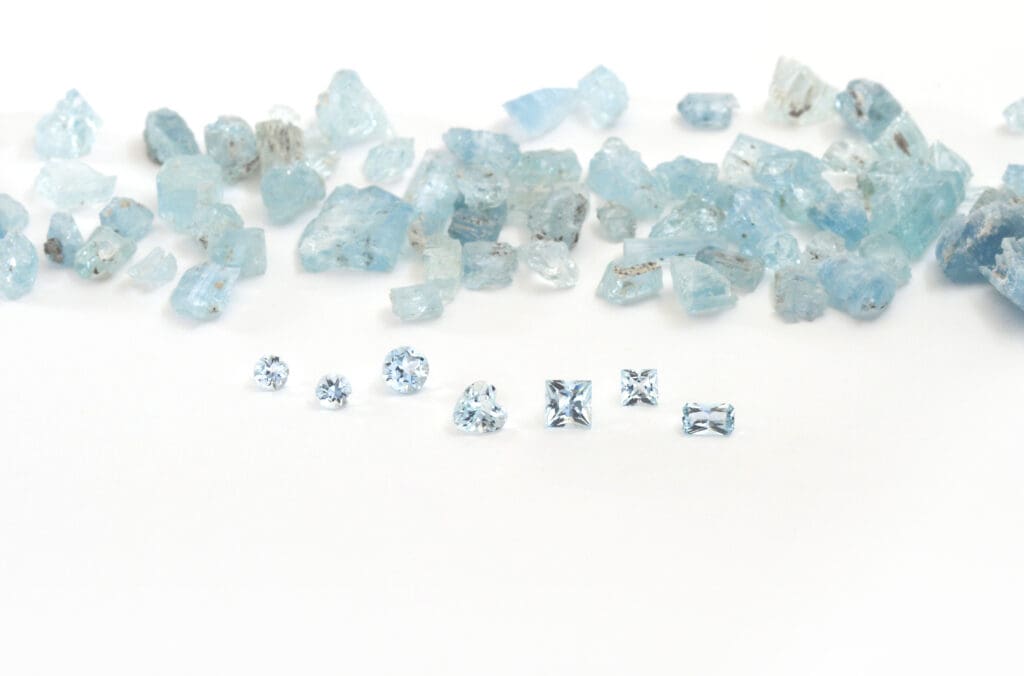
Where Aquamarines Are Found
Aquamarines can grow in massive crystals and is found in many different places all over the world. Brazil and Pakistan are two top producing countries, along with Kenya, Madagascar, Nigeria, Zambia and Mozambique. Did you know we even have American Aquamarine that comes from mines in Colorado?
We love this clear, dreamy colored gemstone jewelry here at BJC and can't wait to add more Aquamarine pieces to our collection!