
We think this semiprecious, glowy stunner is quite underrated, and we hope after reading this blog you’ll agree!
Reason #1 Why Carnelian is Underrated: Carnelian is a type of Chalcedony that can actually be found in the US in places like the Oregon Coast (where we found some), Washington, Montana and Arizona.
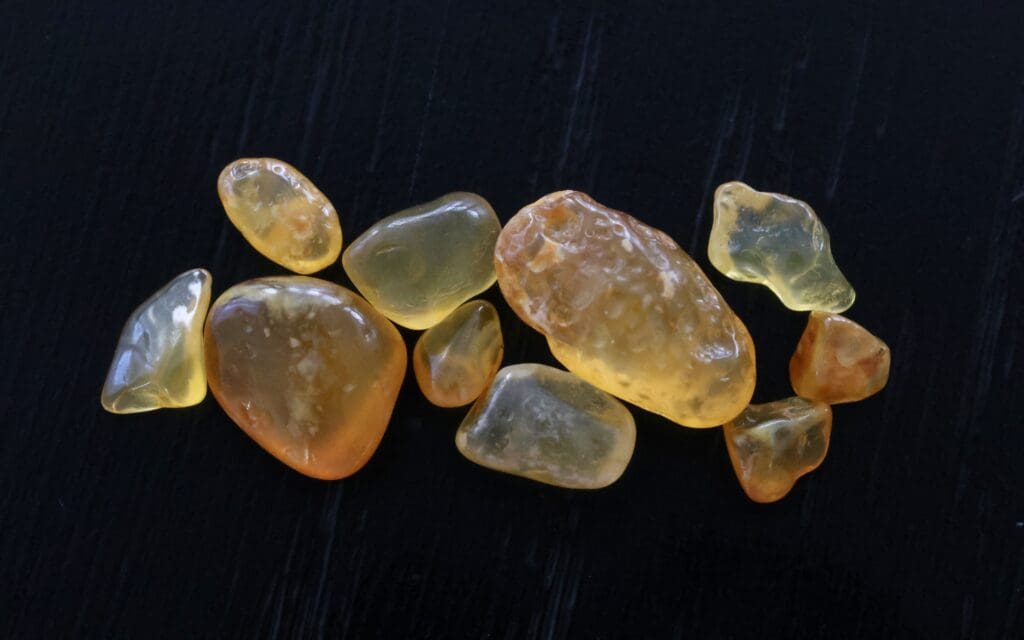
“Carnelian” is the trade name for when Chalcedony is orange, translucent, and evenly colored without any banding. If there are bands or white swirls present, then it gets called Agate.
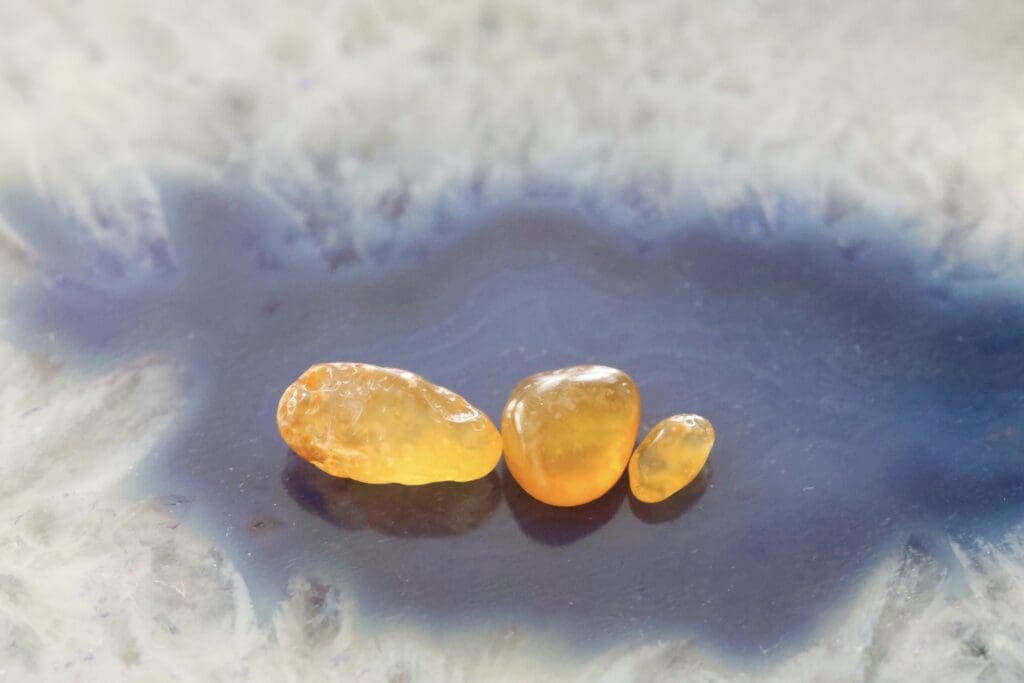
Reason #2 Why Carnelian is Underrated: When you buy Carnelian jewelry, you can get the sunny, saturated orange color you want without feeling like your bank account was just ransacked.
Carnelian is the most affordable type of Chalcedony, but still glows just as nicely as an orange sapphire or spessartine garnet (the latter of which has risen dramatically in price and popularity lately!)
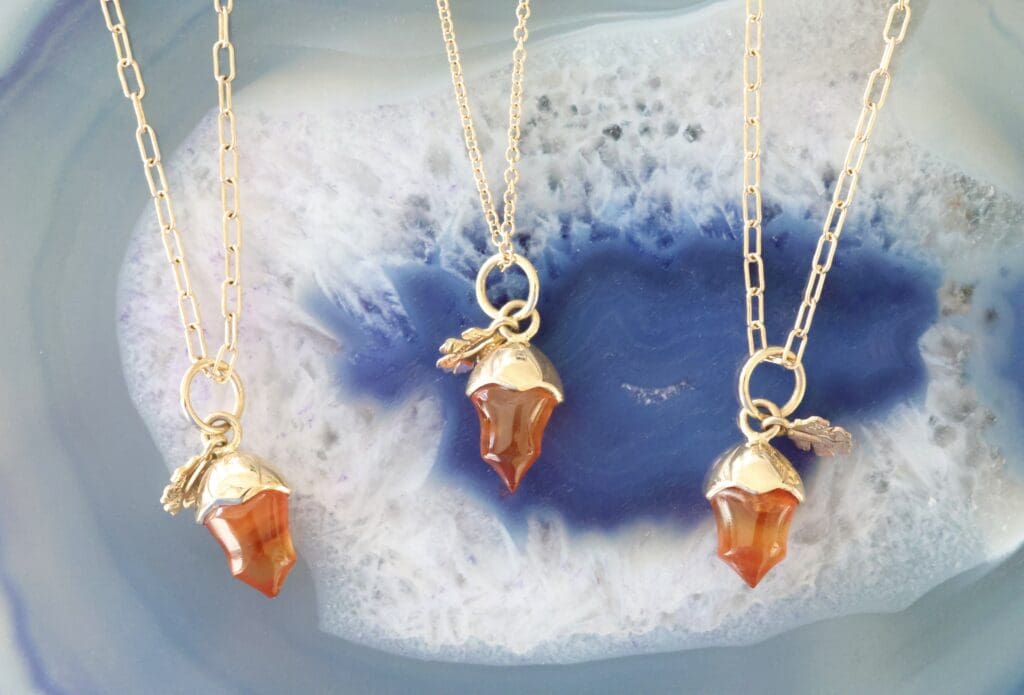
David and Alisa, the husband-and-wife duo behind Mercurius Jewelry, designed these adorable Mini Acorn Charms for you as a Beaumont Jewelry Collective exclusive. Each one has a little gold leaf and a unique Carnelian that was hand-carved by Dave himself, who is a master lapidarist.
They are pictured here on our Fairmined gold cable and paperclip chains, but we honestly think they’d be cute on any chain and would bring some warmth to your jewelry collection.
Reason #3 Why Carnelian is Underrated: It glows like fire in sunlight!
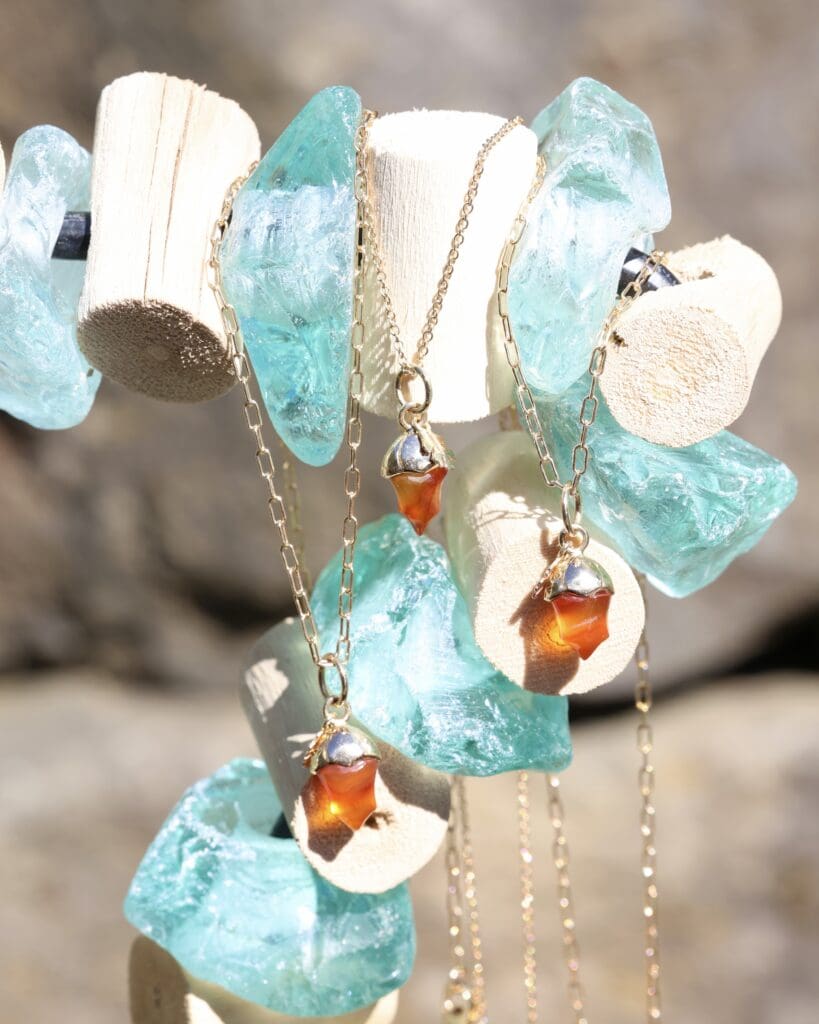
If you thought Carnelian was pretty in that indoor photo, just look at how they glow in the sunlight!!
We can totally understand why the ancient Indians who built the Taj Mahal called Carnelian “the fire stone.” Carnelian gets its orange hue from iron oxide found in its trace inclusions from when the stone was forming. In Arab tradition, Carnelian was considered a stone for the kings due to its association with fire and having a protective, proactive energy.
Would you wear a Carnelian necklace? We hope this interesting gem grows on you just like it has on us!
At a glance: the sea blue variety of the mineral species Beryl, March's birthstone Aquamarine with its soothing hues has historically been a crowd pleaser.
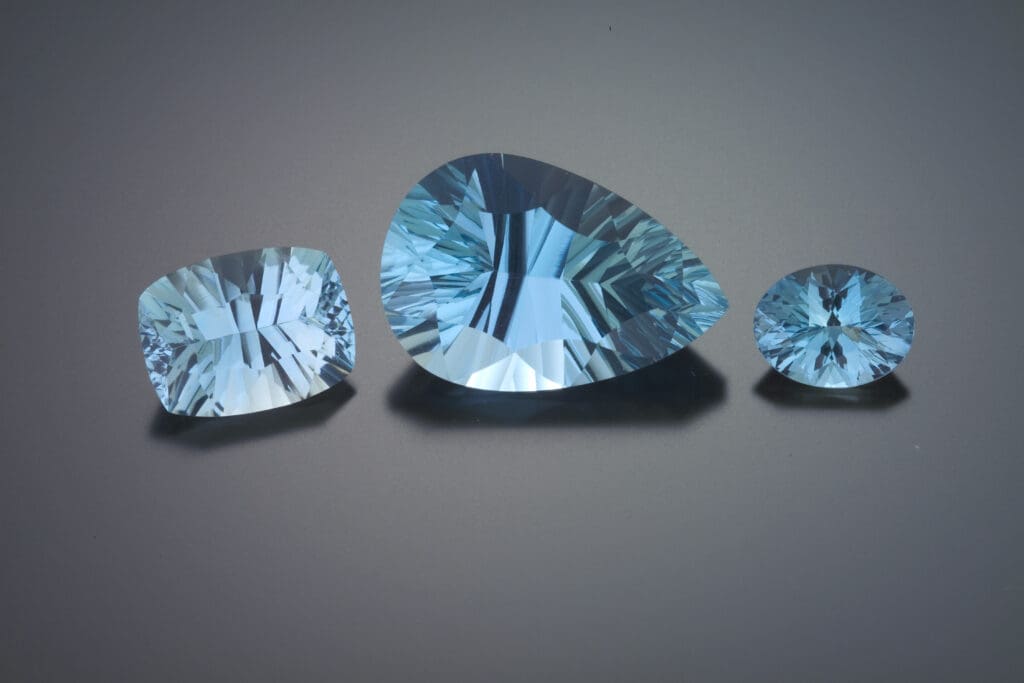
Color
Aquamarine (meaning "seawater" in Latin) comes in shades of light, pastel blue all the way to deep saturated aqua, sometimes with a strong greenish tint. Its gorgeous hues reminds us of the crystal clear waters of the Caribbean!
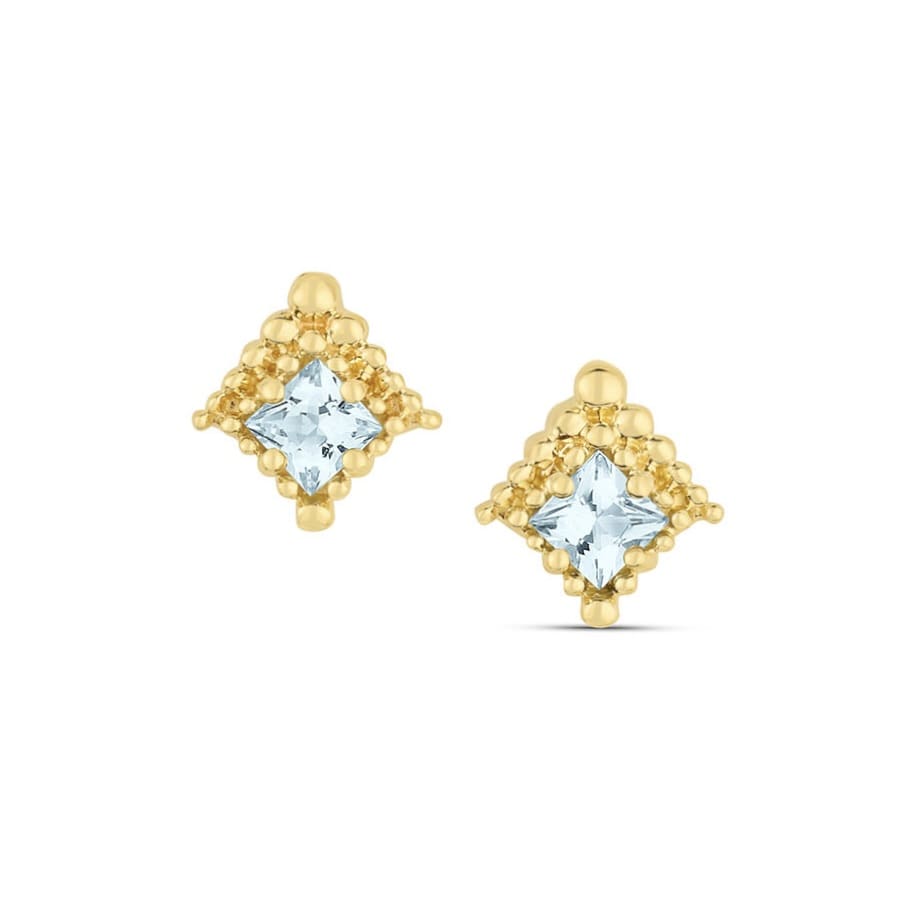
Durability
Aquamarines are a 7.5-8 on the Moh's Scale of Hardness, making them durable enough for daily wear. They are not as hard as diamonds and sapphires, however, so they are a bit more susceptible to scratching. If you own an aquamarine ring, exercise more caution when wearing it than you would with diamond rings. Using warm water and mild soap on aquamarines is always fine. You should double check to make sure your aquamarine doesn't have any surface-reaching fractures or large inclusions before submerging it in an ultrasonic cleaner.
Symbolism and History
In the ancient past, mariners and sailors believed that aquamarine would protect calm waves and protect them while they were at sea. According to Greek mythology, Aphrodite adorned her daughter's hair with aquamarines as an expression of divine love. Aquamarine later became a popular bridal gift as it was thought to bring happiness in marriage. In color psychology, blue is often recognized as one of the most tranquil colors that is known to reduce stress and even lower your heart rate!
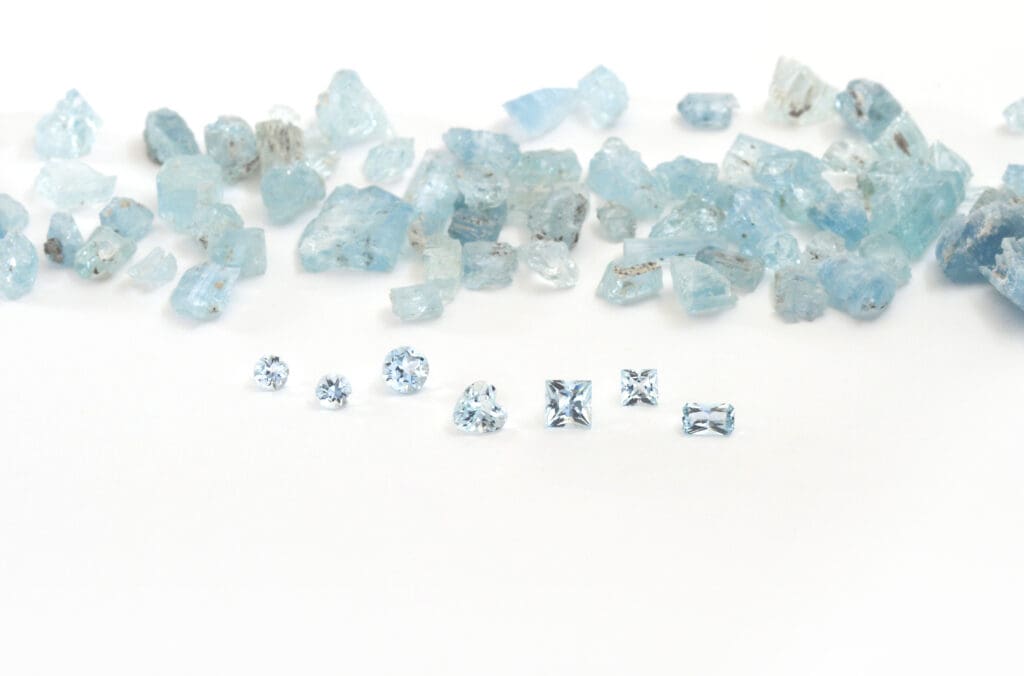
Where Aquamarines Are Found
Aquamarines can grow in massive crystals and is found in many different places all over the world. Brazil and Pakistan are two top producing countries, along with Kenya, Madagascar, Nigeria, Zambia and Mozambique. Did you know we even have American Aquamarine that comes from mines in Colorado?
We love this clear, dreamy colored gemstone jewelry here at BJC and can't wait to add more Aquamarine pieces to our collection!
Garnet’s stunning varieties are so underrated in our opinion, even though awareness about these juicy gems has been expanding!
Reason #1 why garnets are underrated: some garnets have even greater color dispersion than diamonds!
Demantoid garnet, the most highly sought after type of andradite garnet, has better color dispersion aka “fire” due to its high refractive index and specific chemical composition. It simply splits white light into spectral colors more effectively! On top of that, demantoid garnet becomes even more valuable when it contains a special “horsetail inclusion” that resembles….you guessed it, a horse’s tail.
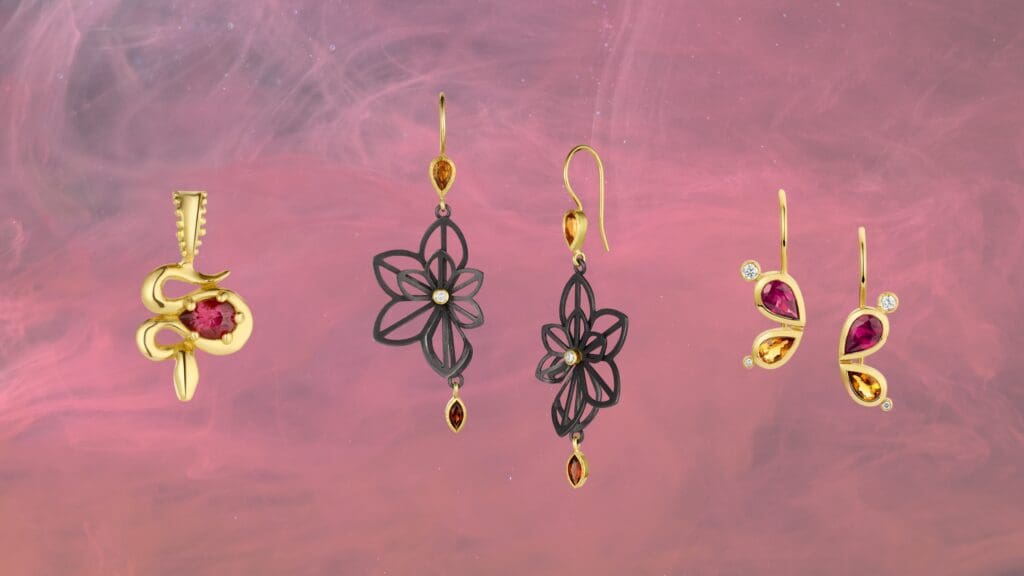
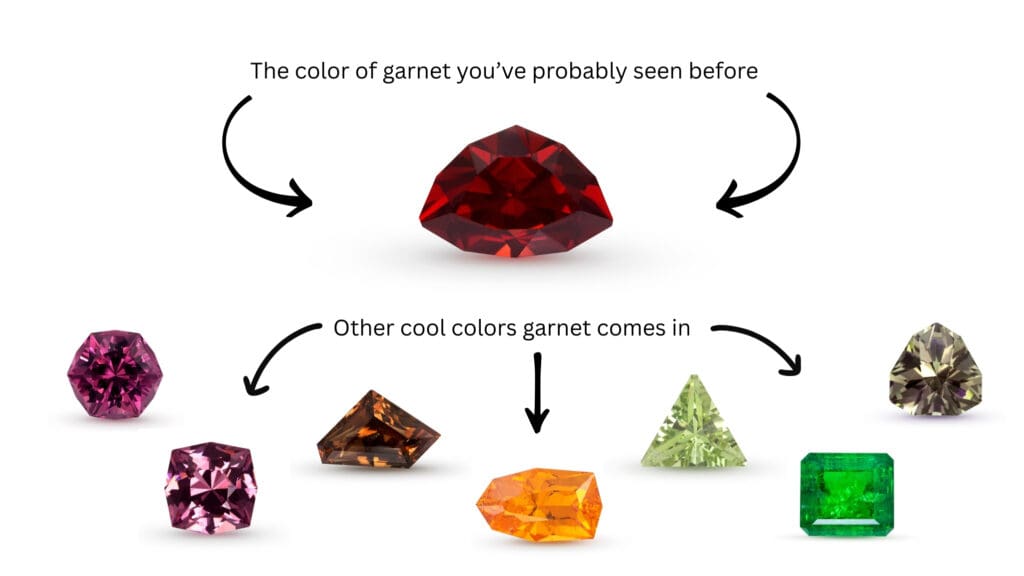
Reason #2 why garnets are underrated: garnets come in SO many different hues!
You might associate garnet with the color red, but in reality garnets come in 15 different species that produce gorgeous neon oranges, raspberry and blush pinks, vivid greens, honey brown, lemon yellow and even uber rare color change blue-to-purple.
Whether you are into raspberry-colored rhodolite (such as the garnets shown in the 3 pieces of jewelry we’ve curated above) or punchy green tsavorite that almost looks like an emerald, or more subdued pink malaya…garnet has got you covered.
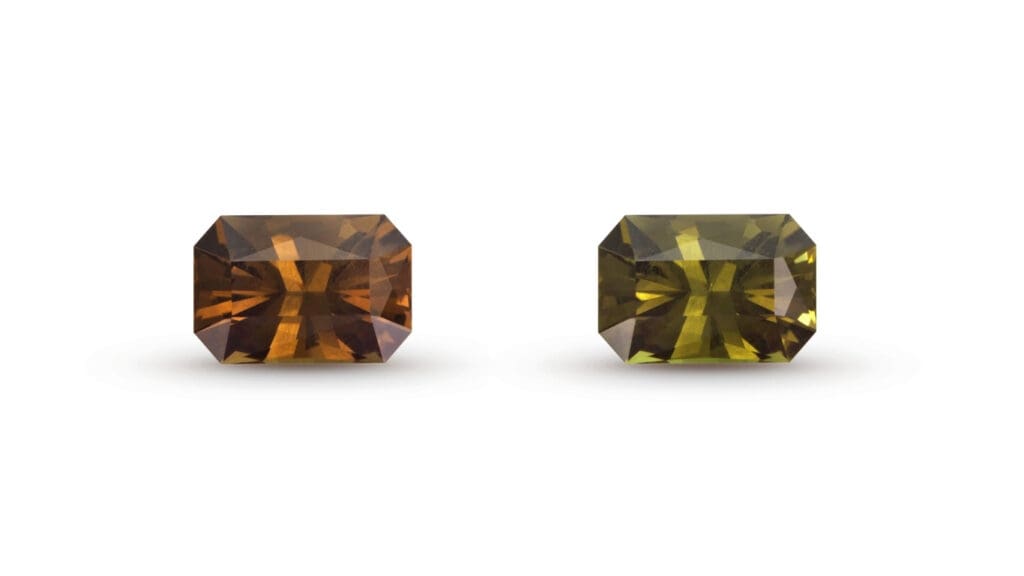
Reason #3 why garnets are underrated: some garnets are color-change, meaning they can show two completely different colors under different lighting conditions!
Not all gemstones can exhibit color change, which makes the ones that do rare and special. This phenomenon is completely natural, and many of these garnets are actually a blend of multiple garnet species. Garnets can show blue-to-violet, pink-to-purple, brown-to-green, purple-to-red, and even teal-to-purple. East Africa, where one of our awesome suppliers ANZA Gems sources from, is known to produce top quality color changing garnets. Owning a color-change gemstone is like having two gems in one!
Garnet is simply a downright versatile, endlessly interesting, fun gemstone. We are convinced the more varieties you see of them, the more you'll fall in love with them!